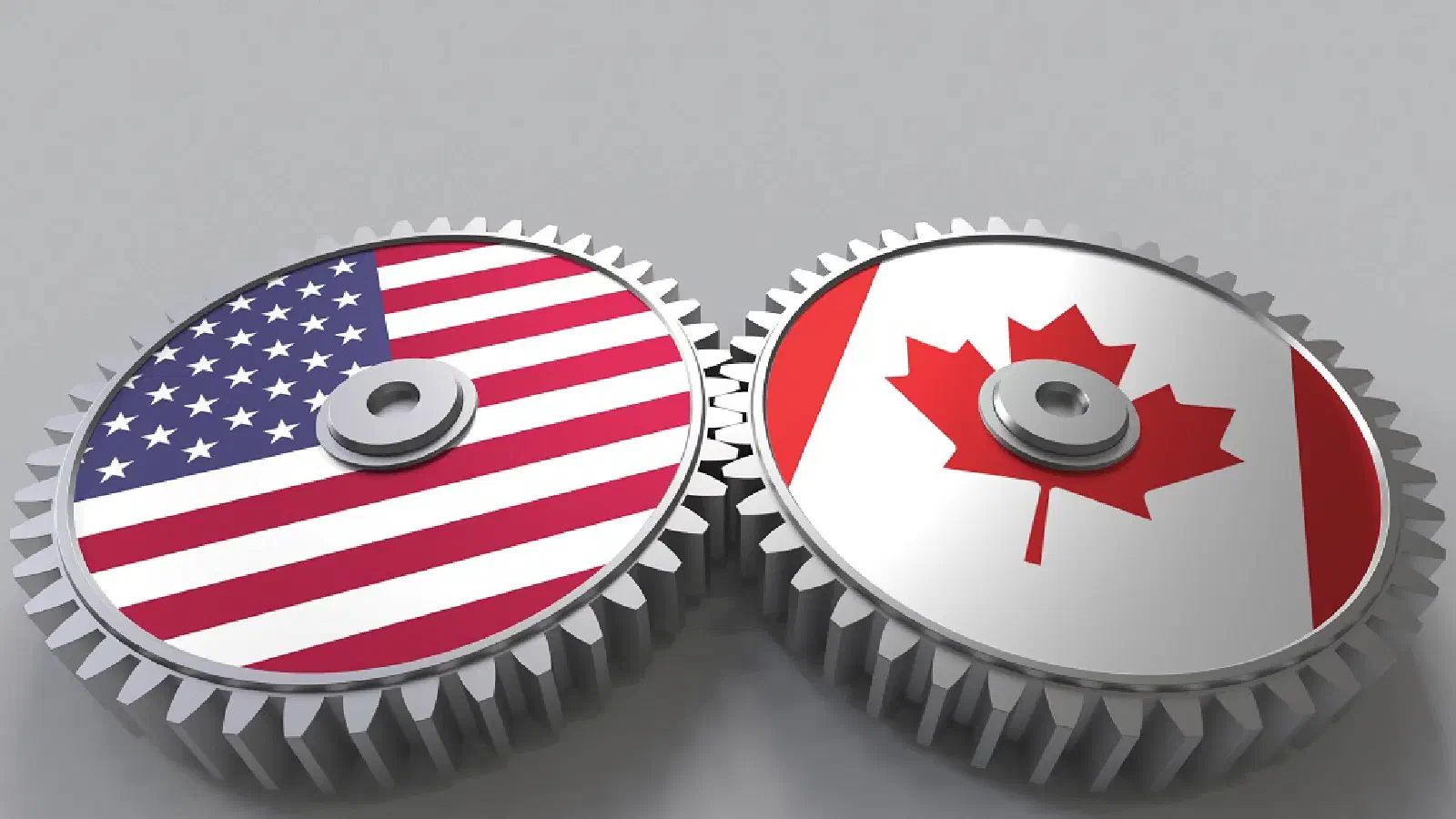
U.S.–Canada freight requires accurate customs documents, commodity classification, declared values, and coordination among the shipper, carrier, customs broker, and receiver. Border delays are less likely when that information is complete before pickup.
Table Of ContentsBut don’t let the numbers fool you.
Here are five things you should know to safely ship freight to Canada.
#1. Freight Shipping to Canada Can Get Expensive
Is shipping to Canada expensive? Transporting freight to Canada is complicated since it’s the world’s second-largest country. The de minimis system levies import duty and tax on any product valued at over $20CAD. And, you might have to pass some of the surcharges and handling fees to the buyer.
So, be sure to factor in the higher postage rates, fees, and extras when you ship from US to Canada. Also, consider working with a niche freight operator to help you obtain business-friendly shipping rates.
#2. Canada Is a Member of NAFTA
NAFTA is a trade agreement between the US, Mexico, and Canada that eliminated tariffs on commodities imported from one country to another. The deal benefits the agricultural, automotive, and textile trade between the three countries.
NAFTA certification is required for tariff exemptions to apply to imported goods shipping into Canada from the USA. The US exporter must complete the NAFTA certificate, not the Canadian importer. However, customs regulations require Canadian importers to preserve importation data for six years. Inaction can result in AMPS penalties.
Be sure to complete the form correctly to ensure quick processing of NAFTA-exported products. The importer may not have the exporter’s NAFTA certificate of origin when importing items. Customs will give the Canadian importer a year to present a valid NAFTA certificate, triggering the post-entry recovery of paid tariffs.
In 2018, the US, Mexico, and Canada negotiated the USMCA, which replaces NAFTA. It retains NAFTA’s essential values but updates them to meet the difficulties and growth of the industry in the three countries. In the meanwhile, NAFTA remains in force.
#3. There’s Plenty of Paperwork Required
Find out what documentation Canadian Customs requires. Make sure all paperwork is in order and follow the shipper’s instructions.
When shipping goods from USA to Canada, make sure you have:
Canada Customs Invoice (CCI) — This is a requirement for US-Canadian shipments. Customs Canada needs this paperwork to know the shipment’s details and who is accountable for duty. One copy goes with the freight, the other with the BOL.
Commercial Invoice — This is also necessary to ensure smooth Canadian-US shipments. It is the primary payment agreement between buyer and seller. The Commercial Invoice must show the shipment value. One copy goes along with the freight, the other with the BOL.
Bill of lading (BOL) — This lists the goods in the package. It is a legal contract that provides the driver and carrier with all pertinent information.
Certificate of Origin — This certification certifies production and is needed if your goods are NAFTA qualifying. In other words, your commodities must be made in a memo.
Proof of Delivery (POD) — This certifies receipt of goods and contains the delivery date and time.
#4. Avoid Shipping Prohibited Goods
The US Department of Commerce’s Bureau of Industry and Security (BIS) coordinates with Canadian customs and border agencies to regulate US export and re-export. BIS analyzes export, re-export, presumed export, and transfer licensing applications in the USA.
This restricts the spread of illegal or counterfeit goods, so make sure to avoid the following when sending cargo to Canada:
Firewood;
Fresh fruit;
Brass knuckles, pepper spray, and tasers;
Hate propaganda;
Knives, ammo, firearms, and crossbows – not even for fishing or hunting;
Canadian customs can inspect mobile devices, laptops, and desktop PCs for pornographic material;
Customs can seize labels that aren’t legible – even Kosher goods are subject to customs laws.
#5. Some Legal Goods Can’t Be Shipped to Canada
Customs won’t allow certain legal items into Canada. For instance, while cannabis is legal, importing it from the US is illegal without authorization. Permits are granted to those who meet government criteria.
Trade between the United States and Canada is a vast industry, and companies that take advantage of a North American distribution model generate enormous profits. For this reason, it’s best left to freight shipping firms, which can handle the complex rules and regulations that can cost your organization thousands of dollars.
Our DFW trucking company has specialized in cross-border freight for over 35 years, implementing the fastest way to ship to Canada for American businesses.
Our expertise in cross-border freight shipping ensures that your packages make it across the border and to their recipients efficiently and safely.
What documents are needed for U.S.–Canada freight?
International freight typically needs a commercial invoice, bill of lading, accurate commodity description and classification, declared value, country of origin, and the customs information required by the broker and border agencies.
Who clears a freight shipment through Canadian customs?
The importer normally appoints a customs broker, but the shipper, carrier, broker, and receiver must coordinate the documents and release information before the truck reaches the border.
What commonly delays freight at the Canadian border?
Missing or inconsistent documents, incorrect commodity classifications, unresolved duties or taxes, and incomplete broker setup can hold a shipment even when the carrier and equipment are ready.
A compliance-first guide to the four permit types for oversized and overweight transport — what triggers each one, how state rules differ, and how to avoid the lead-time mistakes that strand loads on the shoulder.
A field guide to 20 major North American carrier networks—and how brokers can use carrier knowledge to find stronger lanes, better capacity, and new shipper opportunities.
Data center freight includes server racks, switchgear, generators, chillers, UPS systems, cable, and replacement parts that must arrive on schedule, intact, and visible from pickup to delivery.
Read article→
This website uses cookies to improve functionality and user experience. By continuing to use this site, you acknowledge our use of cookies. See our
privacy policy.

 Find out what documentation Canadian Customs requires. Make sure all paperwork is in order and follow the shipper’s instructions.