The Supreme Court Just Changed the Rules for Freight Brokers
The U.S. Supreme Court's May 14, 2026 ruling in Montgomery v. Caribe changes the freight broker liability conversation. Here is what happened, why it matters for shippers, and how Cowtown vets carriers before a load ever moves.
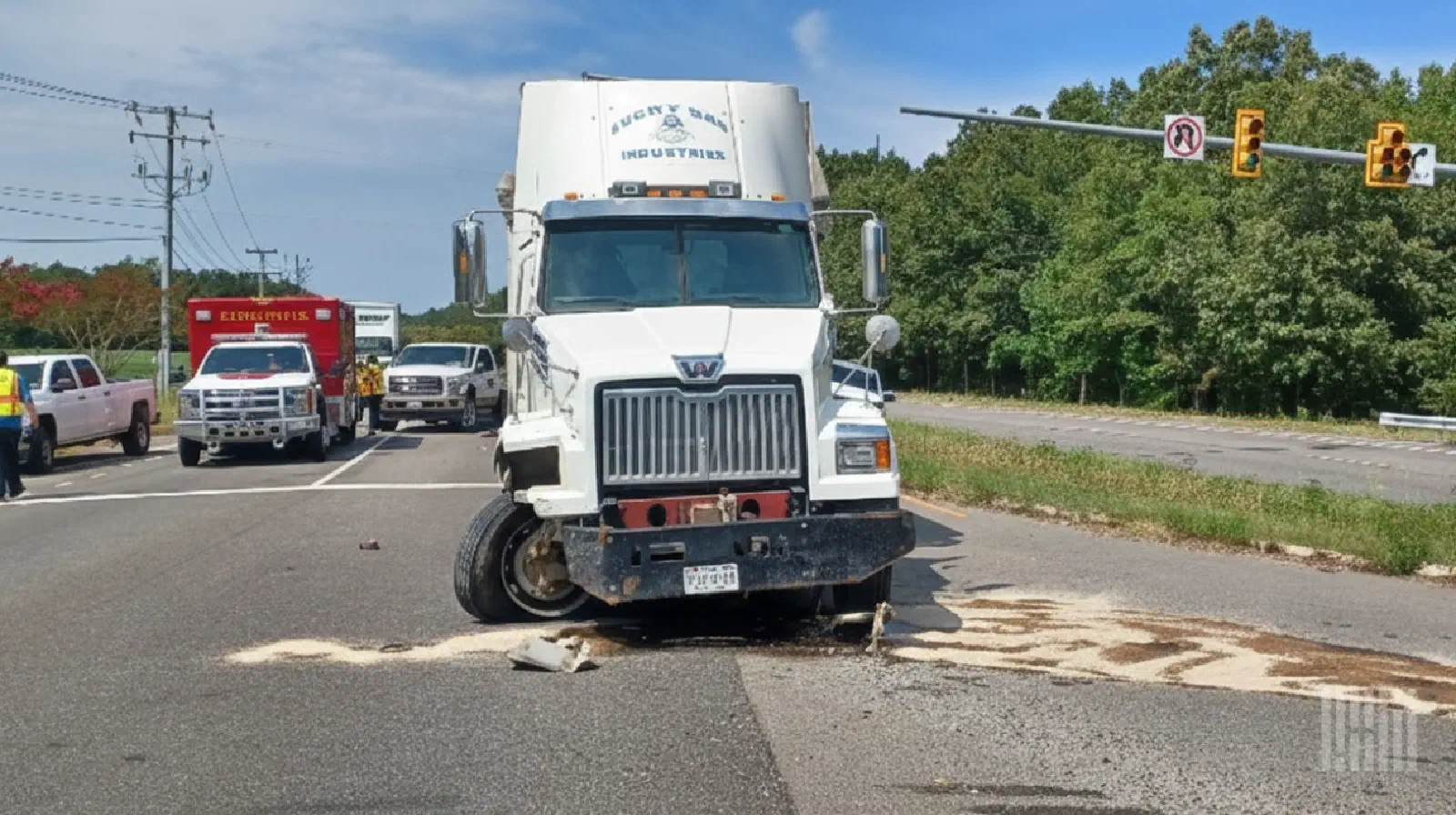
A truck accident scene similar to the 2017 Illinois crash at the center of Montgomery v. Caribe Transport II, LLC.
TL;DR
The U.S. Supreme Court ruled 9-0 in Montgomery v. Caribe that freight brokers can face state-law negligent hiring claims when they select unsafe carriers. For shippers, that raises the importance of documented carrier vetting, active authority checks, safety-score review, insurance verification, and broker accountability before a load is dispatched.
Table Of Contents
What happened
In 2017, a truck driver for a carrier called Caribe Transport II was hauling a load of plastic pots through Illinois. The load was arranged by C.H. Robinson, one of the largest freight brokers in the country. The driver veered off course in his Mack truck and struck a tractor-trailer parked on the shoulder of the road.
The driver of that parked truck, Shawn Montgomery, lost his leg and sustained permanent, life-altering injuries.
Montgomery sued C.H. Robinson. His argument was straightforward. Caribe Transport had a conditional safety rating from the FMCSA when C.H. Robinson hired them. The carrier had already been flagged for driver qualification failures, hours-of-service violations, poor maintenance records, and an elevated crash rate. Montgomery argued the broker knew or should have known that putting this carrier on the road was a foreseeable danger to everyone on that highway.
For years, C.H. Robinson used a federal law called the FAAAA to get these kinds of state-level lawsuits thrown out. On May 14, 2026, the U.S. Supreme Court ruled 9-0 that shield is gone for good.
The ruling means freight brokers can now be held liable under state law when they negligently select an unsafe carrier. The FAAAA’s safety exception preserves every state’s right to bring these claims. That resolves a split among federal appeals courts and changes the legal landscape for all 28,000 freight brokers operating in the United States.
“If brokers were preempted from state tort law with no federal safety standards to fill the void, they would operate in a black hole with no meaningful safety-related regulation at all.” Justice Brett Kavanaugh, concurring opinion
How to vet your broker or carrier
This ruling is a wake-up call for anyone moving freight. Whether you are using a broker or booking a carrier directly, you now have a roadmap for the questions to ask and the boxes to check before a truck ever leaves your dock.
Here is what to look for:
Active operating authority Verify the carrier or broker holds an active MC or DOT number through FMCSA SAFER
. If authority is revoked or inactive, stop there.
Safety rating Only work with carriers rated Satisfactory or Unrated by the FMCSA. A Conditional or Unsatisfactory rating is a documented red flag. That is exactly what Caribe Transport carried when C.H. Robinson booked them.
CSA BASIC scores FMCSA scores carriers in categories like Unsafe Driving, Hours of Service, and Vehicle Maintenance. High percentile scores in these categories signal elevated risk. Check them through FMCSA SMS
.
Contingent auto liability insurance This is the minimum insurance floor to confirm right now. Contingent auto liability provides coverage when the underlying carrier policy fails to respond. Ask your broker for a current certificate of insurance and confirm this coverage is listed.
Time in business New authority carriers, usually under 12 to 18 months, carry statistically higher risk and are a common vector for freight fraud. Ask how long the carrier has been operating under their current authority.
Documented vetting process Ask your broker directly whether they have a written carrier vetting process
. If they cannot answer that question, that is the kind of broker this ruling was designed to hold accountable.
On insurance, the baseline to confirm today is contingent auto liability
. This coverage steps in when a carrier’s primary auto policy fails to pay out after an accident, which happens more often than most shippers realize. As the legal landscape develops post-Montgomery, more insurance layers may become relevant.
How Cowtown is protecting you
We have been doing this the right way since day one. At Cowtown, our carrier vetting process is rigorous, documented, and applied to every single carrier we consider placing on a load.
The red flags present in the Caribe Transport situation, including a conditional safety rating, driver qualification failures, and an elevated crash rate, are exactly what our screening process is built to identify and reject before a truck ever gets dispatched.
Our process includes:
Active FMCSA operating authority verified on every load
No conditional or unsatisfactory rated carriers, ever
CSA BASIC percentile scores and out-of-service rates reviewed via FMCSA SAFER
Crash history cross-referenced against industry databases
Current insurance certificates confirmed before dispatch
Every selection decision documented with a full audit trail
In the last three years, Cowtown has moved 43,200 loads with 10 total accidents, a 0.023 percent accident rate. The industry average is roughly 0.2 percent. That means Cowtown runs at nearly 10 times better than the industry average. We were not named in a single lawsuit, and neither were our clients.
This ruling does not change how we operate. It confirms why we operate the way we do. Discovery requests in post-Montgomery lawsuits will seek carrier vetting procedures, internal screening criteria, communications with carriers, and any safety data that was reviewed or ignored. We are prepared to stand behind every decision we make because we document all of it.
What shippers should do now
Regardless of who you broker with, ask the hard questions:
What data do you use to vet carriers?
Do you have a documented process?
Can I see it?
What insurance layers are in place if something goes wrong?
A broker worth trusting will have solid answers.
If you have questions, reach out
and we will walk you through our process.
What did the Supreme Court decide in Montgomery v. Caribe?
On May 14, 2026, the U.S. Supreme Court unanimously held that state negligent-hiring claims against freight brokers can move forward when they concern motor-vehicle safety.
What should shippers ask a freight broker about carrier vetting?
Ask whether the broker verifies active FMCSA authority, reviews safety ratings and CSA BASIC scores, confirms current insurance, checks time in business, documents its procedures, and keeps an audit trail.
What does the ruling mean for shippers?
Shippers have a stronger reason to evaluate how a broker selects carriers rather than relying on price or network size alone. Documented safety checks and accountable carrier selection now carry greater legal and operational importance.
A compliance-first guide to the four permit types for oversized and overweight transport — what triggers each one, how state rules differ, and how to avoid the lead-time mistakes that strand loads on the shoulder.
A field guide to 20 major North American carrier networks—and how brokers can use carrier knowledge to find stronger lanes, better capacity, and new shipper opportunities.
Data center freight includes server racks, switchgear, generators, chillers, UPS systems, cable, and replacement parts that must arrive on schedule, intact, and visible from pickup to delivery.
Read the story→
This website uses cookies to improve functionality and user experience. By continuing to use this site, you acknowledge our use of cookies. See our
privacy policy
.