
TL;DR
Shipping an excavator requires exact dimensions and weight, trailer selection based on height and ground clearance, and a safe loading plan. Larger machines may need permits, escorts, route surveys, or partial disassembly.
TL;DR
Since excavator shipping is not an everyday occurrence, this guide will answer many of the questions you have on the process, ranging from the types of excavators we can move to excavator transport costs.
There are many different types of excavators, each with its functions and particularities. Here are some of the most common ones.
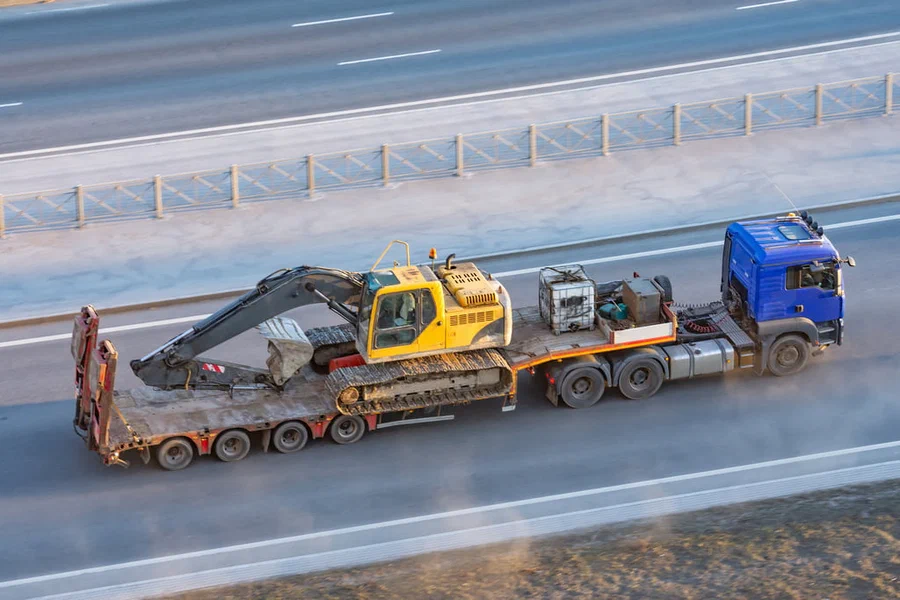
Crawler excavators are some of the most frequently used excavators. They are equipped with steel tracks similar to the ones used in the army, which gives them the ability to scale hills and uneven terrain. The extra weight also allows crawler excavators to be more stable when lifting heavy material above their center of gravity.
This type of excavator is used in a wide range of industries, including heavy-duty construction and mining. They can be utilized to dig large holes – such as trenches or foundations – move earth, demolish existing improvements, etc.
Dragline excavators use a rope system to lift and move debris. They are commonly used in civil engineering, to build roads or ports, for example, as well as a pond and canal dredging. Some dragline excavators can be dismantled to be transported more easily on flatbed trailers.
Skid steers are smaller than other types of excavators. They include different steering systems for right and left wheel pairs, allowing them to operate independently and at different speeds. Skid steer excavators come in handy in narrow areas, such as residential neighborhoods or transporting raw material around a construction site.
Vacuum excavators, sometimes called suction excavators, are a type of excavator that produces powerful suction through a wide pipe. It is used to clear up loosened earth, debris, and litter. Vacuum excavators are more precise and less damaging for the rest of their environment than other types of excavators. Therefore, they may be used in delicate underground construction sites.
Long-reach excavators feature a lengthier extendable arm that can reach over 100 feet horizontally, allowing this type of excavator to operate in hard-to-reach locations. They are used for dredging and industrial demolition since their reach allows them to tear down structures starting with the upper stories, making demolition safer than explosives or wrecking balls.
Excavator hauling can be a logistic and administrative headache. Depending on your route, the size, and the type of excavator you are transporting, you may need to pull different permits that will add to the excavator transport cost.
Each state has its regulation regarding oversized loads. Therefore, you may need to apply for multiple permits if you cross state lines, arrange for escorts, and provide specialized paperwork if required. Using heavy load shipping experts ensures that your excavator delivery goes smoothly, thanks to a trained team and that all the rules are followed throughout the procedure.
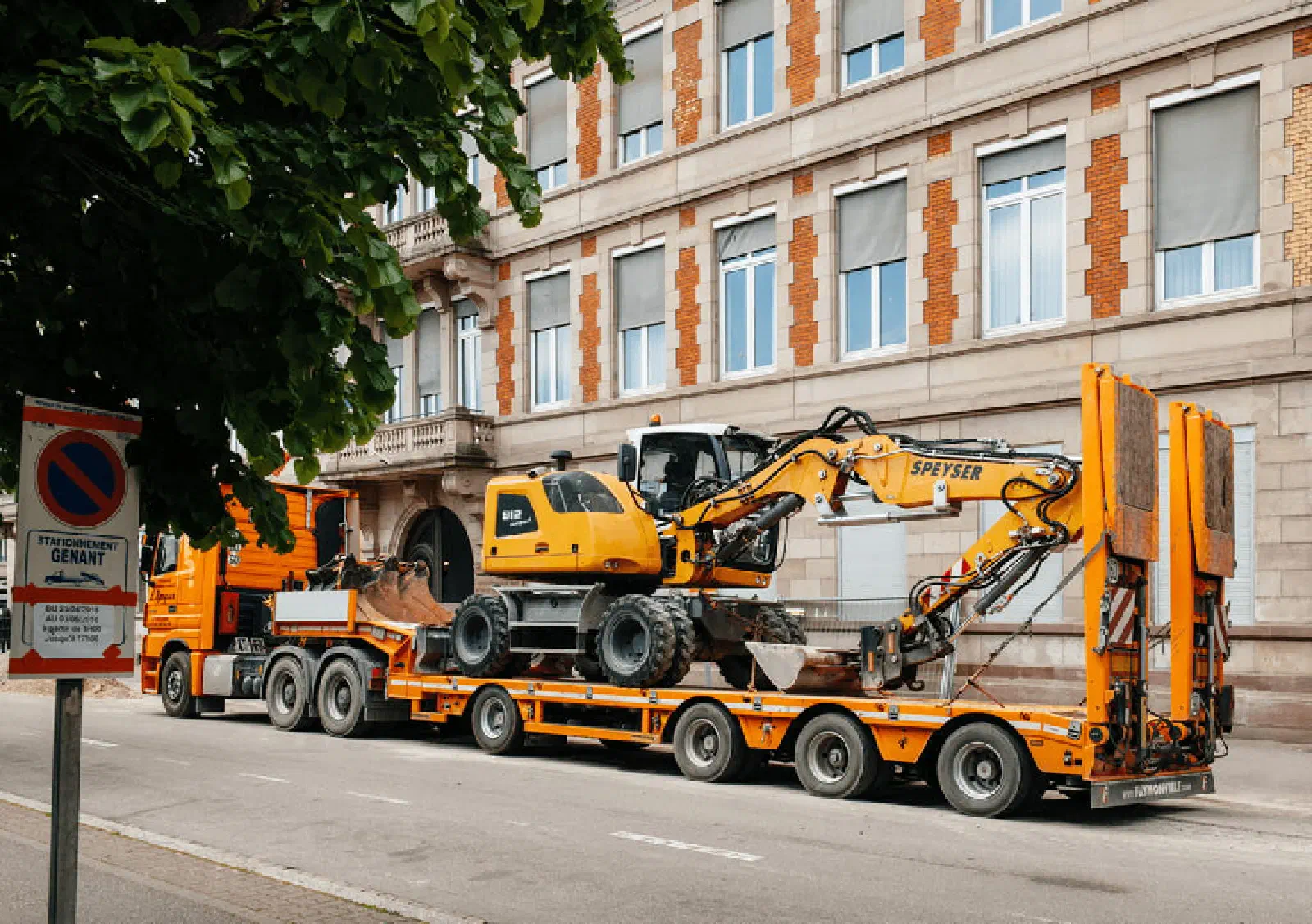
The best trailer for excavator transportation varies depending on the size and height of the equipment. However, in most cases, a flatbed trailer is the way to go. Lowboy trailers are the most appropriate since they can accommodate an excavator’s tall size and heavy weight. Trailers with higher numbers of axles have heavier hauling capacities and can go up to 80,000 lbs. in some states.
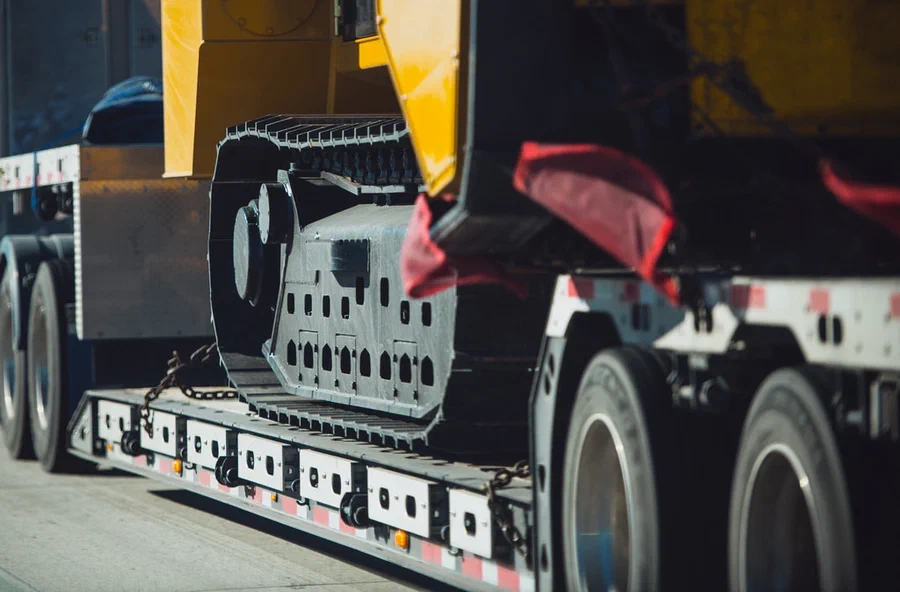
Loading an excavator onto a trailer is a delicate maneuver. The oversized piece of machinery will need to be secured appropriately for safe shipping using heavyweight chains and boomers to reach its destination without damage.
Loading an excavator for shipping should be accomplished on a level and sturdy ground by an accomplished driver, with a pathway clear of debris or grease leading to the trailer. The heaviest side of the excavator should go in first.
The trailer should be the right size and weight for hauling the excavator and the machinery secured with tie-down equipment and tie-down points. Any articulation points, such as pivots or hinges, as well as doors and covers, should be locked prior to transportation.
To ensure that the tie-downs remain secure during the transport, check that the tires are correctly inflated and do not suffer from any leaks.
Transporting an excavator is not a decision to take lightly. To ensure that this expensive and delicate piece of machinery reaches its destination without any damage while respecting the safety of other users, it is an affair best left to professionals.
Our freight transportation company provides a team of dedicated experts that can accompany you throughout the process, including handling paperwork, providing a fleet of flatbed trucks for loads of all shapes and sizes, and guaranteeing safe and timely delivery. Do not hesitate to request a quote for excavator shippingtoday: our dedicated team will get back to you as soon as possible with a personalized and competitive estimate.
Crawler, dragline, skid steer, vacuum, and long-reach excavators are the most commonly shipped types. Each has different dimensions and weight, so the carrier needs to know the specific type and size before selecting equipment.
In most cases, yes. Depending on the route, size, and weight, oversized-load permits are often required and vary by state, so shippers may need multiple permits, escorts, or specialized paperwork when crossing state lines.
A lowboy trailer is usually the best choice because its low deck height accommodates an excavator’s height and weight. Flatbeds can work for smaller units, while trailers with more axles are needed for heavier machines.
Keep reading
A compliance-first guide to the four permit types for oversized and overweight transport — what triggers each one, how state rules differ, and how to avoid the lead-time mistakes that strand loads on the shoulder.

A field guide to 20 major North American carrier networks—and how brokers can use carrier knowledge to find stronger lanes, better capacity, and new shipper opportunities.
Data center freight includes server racks, switchgear, generators, chillers, UPS systems, cable, and replacement parts that must arrive on schedule, intact, and visible from pickup to delivery.
This website uses cookies to improve functionality and user experience. By continuing to use this site, you acknowledge our use of cookies. See our privacy policy.