Table Of Contents
This guide breaks down what actually drives LTL freight shipping costs, what you can expect to pay, how LTL stacks up against full truckload, and the practical steps small and mid-sized businesses can take to bring their freight spend down.
What Determines LTL Freight Shipping Costs
LTL carriers price shipments based on a combination of the following factors:
- Freight class: Every LTL shipment is assigned a freight class from 50 to 500, based on density, stowability, handling, and liability. Lower classes (denser, easier to handle) cost less to ship; higher classes (bulky, fragile, or high-value) cost more.
- Weight and dimensions: Heavier and bulkier shipments cost more, but density matters as much as raw weight — a large, lightweight shipment can actually cost more per pound than a small, dense one because it takes up more trailer space.
- Distance and lane: Longer hauls cost more, but pricing also depends on the specific lane. Shipping along a busy, well-traveled corridor is often cheaper than shipping to a remote area with limited carrier coverage.
- Fuel surcharges: Most carriers add a fuel surcharge on top of the base rate, which fluctuates with diesel prices.
- Accessorial charges: Services like liftgate delivery, residential pickup/delivery, inside delivery, or limited-access locations all add extra fees that can significantly increase your total cost if they aren’t accounted for upfront.
- Seasonality and capacity: Rates tend to rise during peak shipping periods (like the holiday season ) when carrier capacity is tight.
Average LTL Freight Shipping Rates
Because LTL pricing is so dependent on the factors above, there’s no single “average rate” that applies to every shipment. That said, most LTL shipments fall somewhere between $100 and $500 for shorter regional hauls, and can run from $300 to over $1,000 for longer cross-country shipments — with low-density, high-class freight, accessorials, and peak-season surcharges pushing costs toward the higher end.
The best way to get an accurate number for your specific shipment is to request a freight quote with your actual weight, dimensions, freight class, origin, destination, and any accessorial needs. Generic online calculators that don’t account for these details are often off by a wide margin.
LTL vs. FTL: Which Costs Less?
Whether LTL or full truckload (FTL) is cheaper depends entirely on your shipment size:
- LTL is typically cheaper for shipments under roughly 15,000 pounds or less than about 12 pallet positions, because you’re only paying for the trailer space your freight actually occupies.
- FTL becomes more cost-effective as your shipment approaches a full trailer’s capacity, since you’re paying a flat rate for the whole truck regardless of how full it is — and your freight moves directly from origin to destination without being transferred between trucks at multiple terminals.
- The break-even point generally falls between 8 and 12 pallets, depending on weight, density, and the specific lane. If you’re shipping in this range regularly, it’s worth comparing LTL and FTL quotes side by side for each shipment, since the cheaper option can shift depending on the lane and season.
For a deeper comparison of how the two methods stack up beyond just price, see our guide on choosing between LTL and FTL freight shipping .
How Small Businesses Can Lower Their LTL Freight Costs
You don’t need enterprise-level shipping volume to get better LTL rates. A few practical strategies:
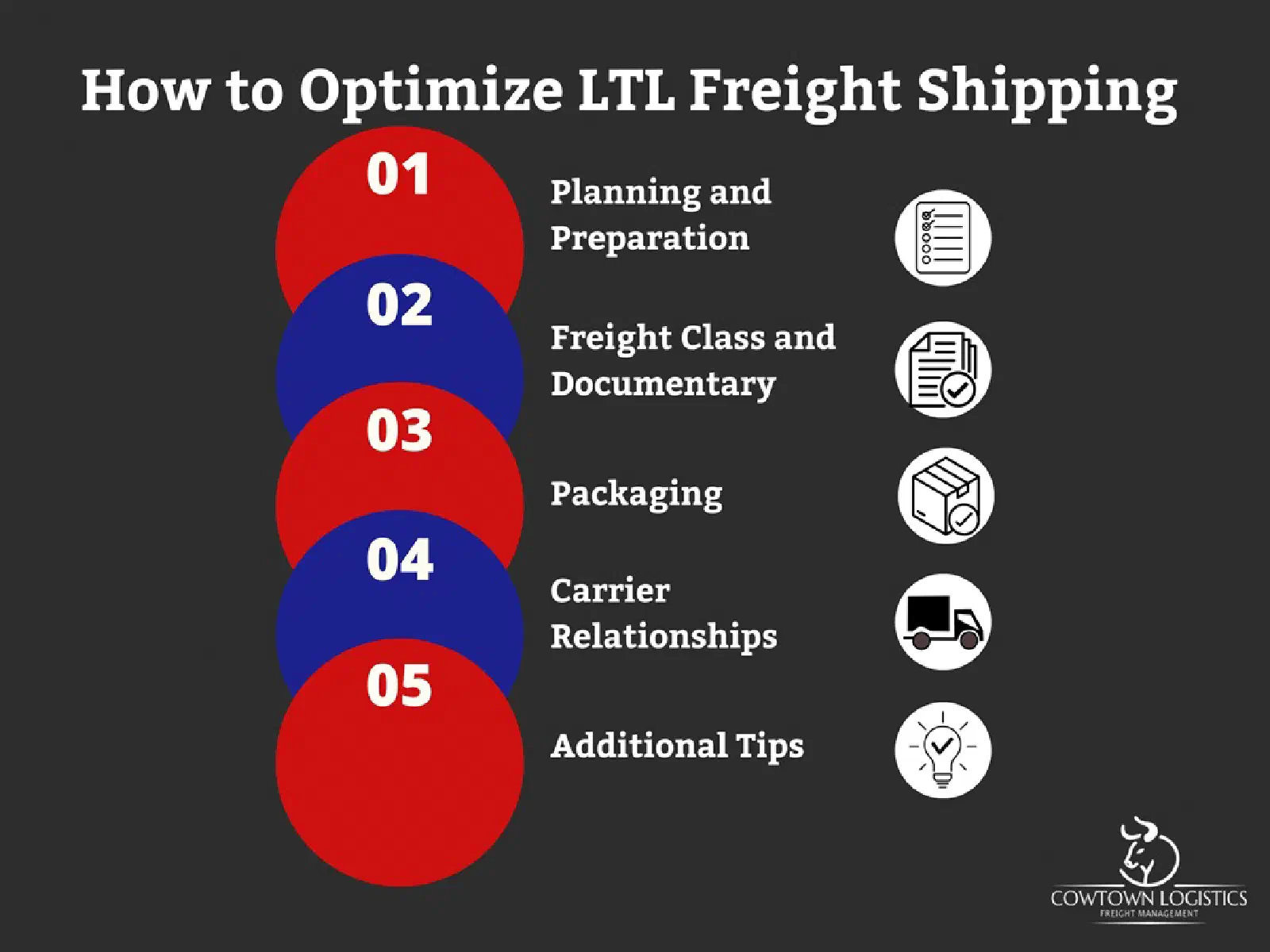
- Get your freight class right. Misclassifying a shipment — even by accident — often results in a reclassification fee after pickup, which can add significantly to your final bill. If you’re unsure how your product should be classified, ask your broker to confirm before booking.
- Maximize density where possible. Properly preparing and packing your pallets to reduce dimensional footprint (without exceeding safe stacking limits) can lower your effective freight class and reduce cost.
- Consolidate shipments. If you regularly ship smaller loads to the same region, consolidating them into fewer, larger shipments can reduce your per-unit shipping cost.
- Be upfront about accessorials. Surprise fees for liftgates, residential delivery, or limited-access sites are one of the most common sources of “why is my invoice higher than my quote” disputes. Disclose these needs when requesting your quote.
- Work with a broker who shops multiple carriers. A freight broker has access to negotiated rates across a network of carriers and can compare options for your specific lane — something that’s difficult to replicate by calling carriers individually.
- Ship during off-peak periods when you have flexibility. If your shipment isn’t time-sensitive, avoiding peak season surcharges can meaningfully reduce cost.
Frequently Asked Questions
How much does LTL freight shipping cost on average?
Most LTL shipments cost between $100 and $500 for regional moves and $300 to $1,000+ for longer cross-country shipments, depending on freight class, weight, density, distance, and any accessorial charges. The only way to get an accurate cost for your specific shipment is to request a quote with your actual shipment details.
Is LTL or FTL cheaper for my shipment?
It depends on size. LTL is generally more cost-effective for shipments under about 8–12 pallets, while FTL becomes the better value as your shipment approaches a full trailer load. Comparing quotes for both is the safest way to know for sure.
Can I track my LTL freight shipment in real time?
Yes. Most LTL carriers provide tracking numbers and online tracking portals once your shipment is picked up, and a freight broker can provide consolidated tracking and proactive status updates across multiple shipments and carriers — useful if you’re shipping with more than one provider.
What’s the cheapest way to ship LTL freight for a small business?
The biggest cost drivers you can control are accurate freight classification, shipment density, and avoiding unplanned accessorial fees. Working with a broker who can compare rates across carriers for your specific lane typically produces better pricing than booking directly with a single carrier.
Get a Freight Quote
Ready to see what your shipment would actually cost? Our team can provide a freight quote based on your real shipment details — no guesswork, and no surprise fees on the back end.