Moffett Delivery 101: When a Piggyback Forklift Saves Your Jobsite
When there is no dock, no forklift, rough ground, or tight access, unloading becomes the real problem. Here is when Moffett delivery makes the difference and what freight is a good fit.
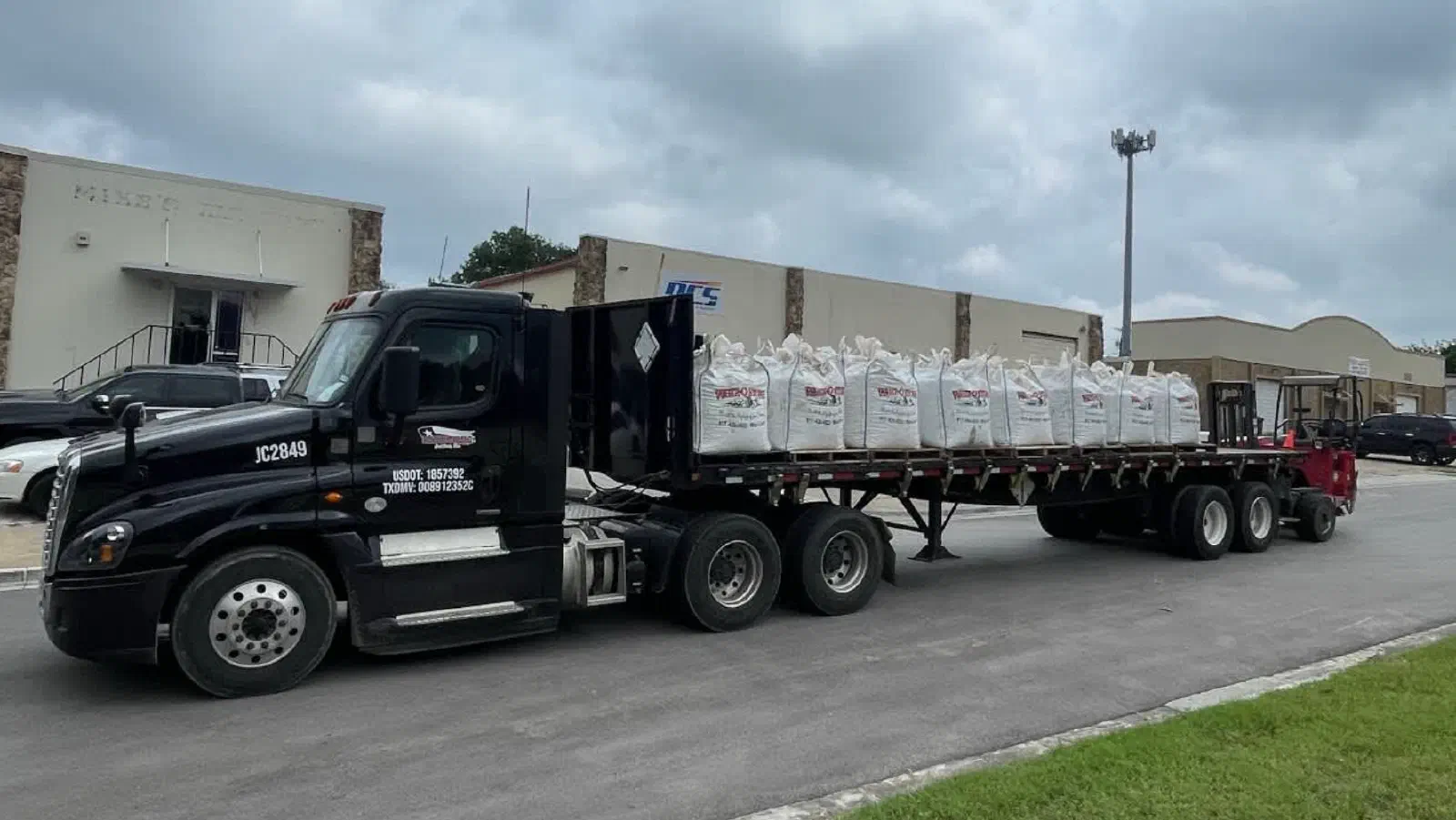
A black truck carrying a piggyback forklift, showing the kind of setup used for Moffett delivery jobsites.
TL;DR
Moffett delivery uses a truck-mounted forklift so the freight can be unloaded on site without depending on a dock or the consignee’s equipment. It is a strong fit for rough terrain, remote jobsites, tight access, and palletized building materials that need controlled placement.
Table Of Contents
When there is no dock, no forklift, rough ground, or tight access, unloading becomes the real problem, not the transportation.
That is where Moffett delivery comes in. A Moffett, also called a piggyback forklift or truck-mounted forklift, is mounted to the back of a flatbed or step deck trailer so it travels with the load and unloads on site.
The term piggyback forklift is widely used in the industry as a catch-all for any truck-mounted forklift. Moffett is the most recognized brand in that category, which is why the names are often used interchangeably.
What Is Moffett Delivery?
Moffett delivery is a freight service where the truck arrives with its own forklift attached to the trailer. Instead of depending on the consignee to provide unloading equipment, the driver detaches the forklift and unloads the material directly where it needs to go.
Most Moffett models are built to handle loads in the 5,000 to 8,000 lb range, depending on the configuration - so if your freight is palletized building materials, steel bundles, or similar jobsite cargo, it is likely a fit.
This is especially useful when the destination cannot unload a flatbed shipment on its own or when site conditions make a standard delivery risky, slow, or expensive.
Best Uses for Moffett Delivery
Moffett delivery is a strong fit for:
Jobsites without dock access
Rural or remote deliveries where rental equipment is hard to arrange
Rough or uneven terrain like gravel, mud, or unfinished pads
Tight urban sites with limited room to maneuver
Facilities that do not have a forklift on site
In these situations, the challenge usually is not getting the freight to the site. The challenge is getting it off the trailer safely and putting it where the crew actually needs it.
Demand for this kind of delivery has grown alongside construction activity in markets that are building fast. Regions like DFW, Houston, San Antonio, the Carolinas, and the broader Southeast are seeing high volumes of jobsite freight that arrives at locations without dock infrastructure. For shippers moving materials into those active corridors - or anywhere else a site is not set up like a warehouse - Moffett delivery is increasingly the practical default, not the exception.
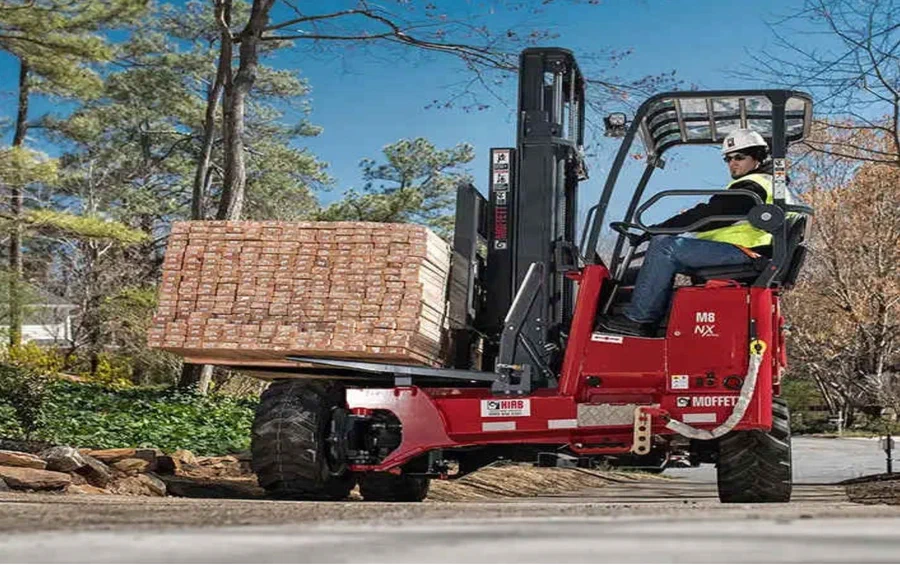
A Moffett unloading lumber where precise delivery and on-site handling matter.
Four Times a Moffett Is the Right Answer
1. No Dock and No Forklift
If the delivery location cannot unload a flatbed on its own, a truck-mounted forklift delivery service solves the problem immediately. The truck and unloading equipment arrive together, which reduces coordination issues and keeps the job moving.
2. Rough Terrain
Warehouse forklifts are not built for mud, gravel, soft ground, or unfinished jobsites. A Moffett is designed for tougher site conditions and gives you a better chance of unloading safely when the ground is less than ideal.
3. Precise Placement
A Moffett helps reduce double handling by putting palletized freight closer to where it will actually be used. That matters when you are unloading drywall, shingles, siding, or other jobsite materials that are time-consuming to move twice.
4. Rural Jobsites
Remote jobsites add another layer of risk because local forklift rentals may be limited, late, or unavailable. Moffett delivery removes that dependency by bringing the unloading equipment with the shipment.
When a Standard Delivery Is the Better Choice
Moffett delivery is not the right fit for every shipment. A standard flatbed or dry van delivery is usually the better call when:
The destination already has a loading dock and a forklift on site
The stop is part of a high-volume LTL route with consistent unloading infrastructure
The freight does not require precise placement and can be unloaded quickly with existing equipment
Site access is tight enough that the added length of a Moffett-equipped truck creates more problems than it solves
If your site is set up to receive freight efficiently on its own, standard delivery is simpler and often faster. Moffett delivery earns its place when the site cannot.
Quick Cost Logic
While a Moffett delivery can cost more on the front end than a standard flatbed delivery, it often reduces the downstream costs that create delays.
The time difference is worth understanding. A delivery that requires coordinating separate unloading equipment can add significant time to a job - industry data points to a range of 60 to 90 minutes for a standard delivery versus 15 to 30 minutes for a Moffett-equipped truck that unloads on arrival. On an active jobsite, that gap translates directly into crew downtime and schedule risk.
Without a Moffett
With a Moffett
Forklift rental
Truck and forklift arrive together
Delivery and pickup fees
One coordinated delivery
Crew waiting on equipment
Immediate unload on arrival
Possible redelivery charges
Fewer jobsite delays
If the site cannot unload quickly on its own, paying for the right equipment up front can be cheaper than absorbing rental fees, crew downtime, and redelivery risk later.
What Freight Is a Good Fit for Moffett Delivery?
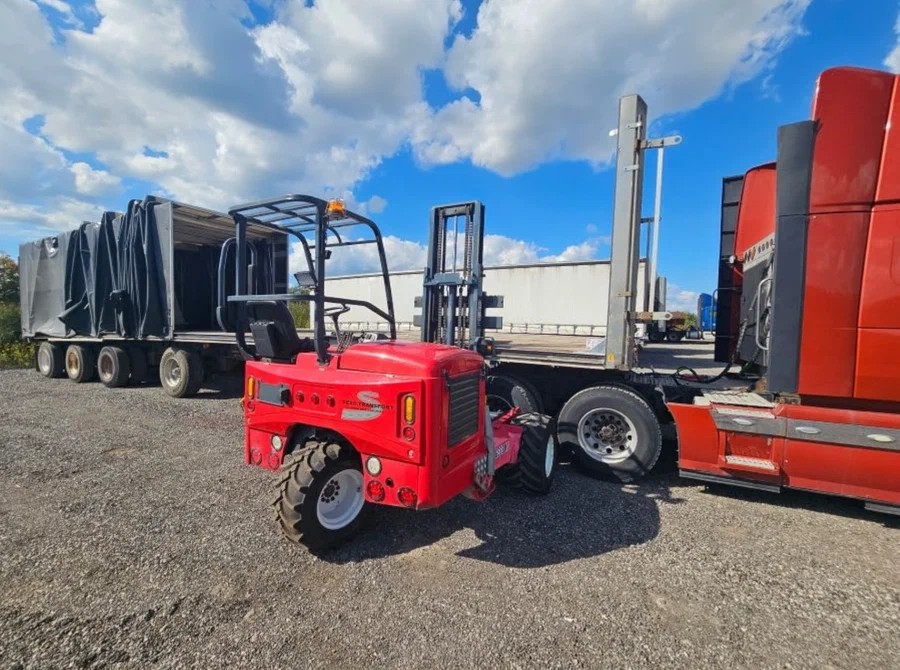
A piggyback forklift staged next to a Conestoga truck for controlled unloading.
Moffett delivery works well for freight like:
Palletized building materials like drywall, roofing, siding, shingles, and lumber
Steel bundles and fabricated components
Precast accessories and related construction freight
Pipe, conduit, and long materials that need controlled unloading
Bagged or palletized industrial products
If your shipment needs controlled placement and the site is not set up like a warehouse, Moffett delivery is often the better answer than trying to make a standard unload work.
FAQ
What is Moffett delivery?
Moffett delivery is a freight service where the truck brings its own truck-mounted forklift. That allows the driver to unload on site without depending on a loading dock or the consignee’s forklift.
When should you use a piggyback forklift delivery?
Use it when the site has no dock, no forklift, rough ground, tight access, or remote conditions that make rental equipment hard to coordinate. It is especially useful when unloading is the real constraint, not the linehaul.
What freight is a good fit for Moffett delivery?
It is a strong fit for palletized building materials, lumber, roofing, siding, shingles, steel bundles, pipe, conduit, precast accessories, and other freight that needs controlled unloading and placement.
What to Have Ready When You Request Moffett Delivery
The more detail you can share upfront, the faster we can match your freight to the right equipment. When you reach out, have the following ready:
Freight type, dimensions, and weight
Delivery address and a description of site conditions (paved, gravel, unfinished pad, etc.)
Any access limitations such as low clearance, tight turns, or restricted entry
Whether the site has any unloading equipment on hand
Your preferred delivery window or any scheduling constraints on the receiving end
Send that information along with your BOL and we will take it from there.
The Bottom Line
Moffett delivery is not just a transportation add-on. It is a jobsite solution. When unloading conditions are the real constraint, bringing the forklift with the freight can prevent delays, reduce handling, and keep the delivery on schedule.
Cowtown Logistics is a Fort Worth-based freight brokerage serving shippers across Texas and beyond. We help customers move freight with the right equipment for the job, including flatbed shipping, step deck capacity, and Moffett delivery when site placement matters. Follow our blog for more freight tips and jobsite logistics insights.
A compliance-first guide to the four permit types for oversized and overweight transport — what triggers each one, how state rules differ, and how to avoid the lead-time mistakes that strand loads on the shoulder.
A field guide to 20 major North American carrier networks—and how brokers can use carrier knowledge to find stronger lanes, better capacity, and new shipper opportunities.
Data center freight includes server racks, switchgear, generators, chillers, UPS systems, cable, and replacement parts that must arrive on schedule, intact, and visible from pickup to delivery.
Read the story→
This website uses cookies to improve functionality and user experience. By continuing to use this site, you acknowledge our use of cookies. See our
privacy policy.