Over-dimensional freight exceeds a legal size or weight limit on at least part of its route. Moving it safely requires accurate dimensions, the right trailer, route and permit planning, and any escorts or special handling required by the jurisdictions involved.
Table Of ContentsOversized truck loads are challenging to ship. When shipping a wide load, you must take the proper precautions and preparations. If not, you risk losing oversized shipments or overpaying.
Shipping massive items such as military equipment, vehicles, construction machines, agricultural machinery, etc. are complicated. These large and heavy items often exceed the standard height, weight, and dimensional guidelines for regular cargo.
Although it may seem like you’re courting disaster if you must ship over-dimensional cargo, incident-free and in-budget oversized freight shipping are possible. Keep reading to learn the best way to ship heavy items from the shipping experts at Cowtown Logistics.
What Is Oversized Load?
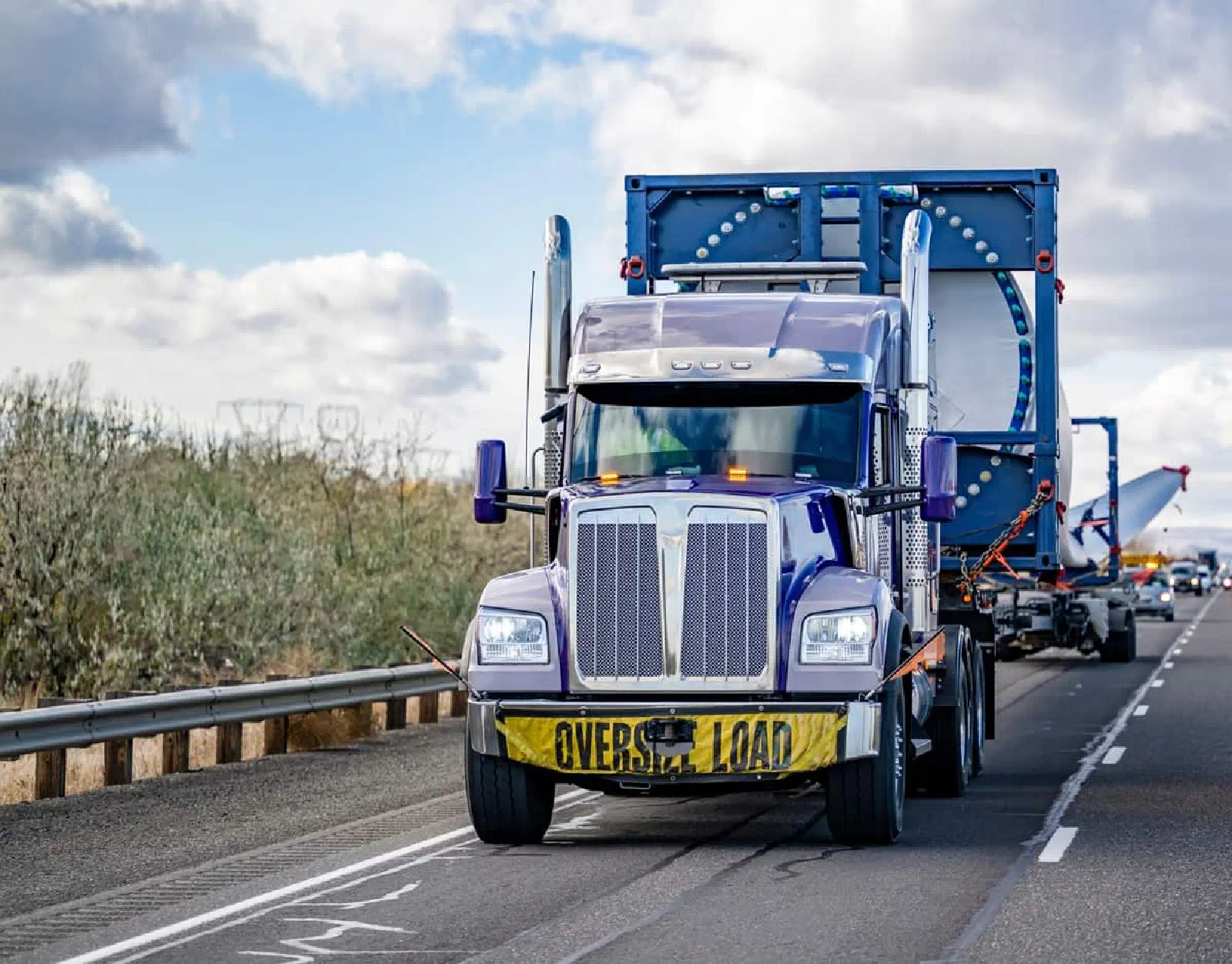
Oversize freight exceeds an applicable width, loaded height, length, or projection limit on its route. Overweight freight exceeds an applicable gross or axle-weight limit. There is no federal vehicle-height limit, and 48- or 53-foot trailer sizes are not nationwide loaded-length limits. Check the vehicle configuration, state requirements, and route before deciding whether a permit is needed. In the U.S., the federal width baseline is 102 inches on the National Network and reasonable access routes, with specified exceptions. Measure height from the road to the highest point of the loaded vehicle, rather than using cargo height alone. See FHWA size guidance. For Canadian movements, check the relevant province and route. Compared with a flatbed trailer, a step deck may reduce loaded height, but does not itself establish legality.
3 Things to Consider When Shipping an Oversized Freight
It isn’t difficult to plan how to ship large items. Keep these factors in mind for the best freight hauling experience possible.
#1. Route and Timing of Your Shipment
One of the biggest factors in determining how to ship a heavy item is the route you’ll take and when you’ll take it. Identifying the best route can also come down to time constraints, which complicate matters. When planning a wide load, this part of the process will take time commitment and strategic thought.
The total distance a shipment must travel, plus your driver’s hours of service clock drastically influences the possible delivery timeline. Smaller factors, such as construction and heavy traffic, will also impact your route and timing. But if you plan for this, you can likely take the most direct route without worrying too much about construction or traffic jams.
#2. Size of Your Load and Space It Will Take
Unfortunately, miscalculating just a single inch over the legal size limits can dramatically increase your shipping costs. To overcome this pitfall, you need an accurate, complete understanding of the size of your shipment and how much space it will require to move.
Due to the complex nature of over dimensional shipping, it’s common for businesses used to ship legal size items to face logistical, legal, and financial issues when transporting wide loads.
For example, you may find that your cargo, once loaded onto a trailer, can’t even fit through the door of your facility. Or, you may run into problems where the front or back end of the load won’t fit on the trailer. The width can also be a problem when leaving your facility.
You may also find throughout the route that it won’t fit through a gate. Or once your cargo finally reaches its destination, you have problems getting it through the door of the facility. Additionally, legal size parameters can change multiple times throughout your trip.
The best way to ship large items requires partnering with a transportation expert to avoid being caught off guard. During a consultation, we’ll work with you to take precise measurements throughout your planned route to ensure you won’t experience major delays from spacing issues.
#3. Increased Weather Impact
Inclement weather impacts how to ship big items and small ones, too. Both legal and wide loads are often at the mercy of the elements. Heavy rain, winds, ice, and storms can drastically impact your shipping times and route. Even in mild weather, the sheer size and weight of oversize shipments make the journey a risky one.
Without planning for inclement seasonal weather such as slick roads or extreme temperature swings, you’ll experience a sluggish supply chain and increased costs. So, be sure to account for the weather when shipping over dimensional cargo:
Time changes and daylight availability for freight movement in September through April.
The impact of the freeze, thaw, and frost cycles in late March and April in the USA.
Unique challenges when shipping across mountainous regions in winter.
Moving wide loads during hurricane season in the southeast USA.
Bad weather can destroy even the best laid plans. Consult with a professional wide load shipping company to help you avoid increased costs and supply chain problems.
Shipping an Over-Dimensional Load: Best Practices
Now that you have a better understanding of the risks involved in shipping wide loads, let’s get into a few best practices to employ to ensure on-time shipping within budget.
Consider What Your Commodity Is
You need to know the exact dimensions down to every square inch when shipping oversized truck loads. Tiny discrepancies can negatively affect your schedule and budget.
Before shipping a large freight commodity, document your shipment’s dimensions and consult with a professional transportation provider. You’ll also want to document the entire load description and handling instructions for safety purposes.
Be Thorough with the Planning
Don’t wait to start planning a wide load shipment. The sooner you get started planning your route and schedule, the better for your sanity and budget. Last-minute shipments are often charged higher rates. In addition, you may find your shipment exceeds legal parameters to such an extent that you’ll need an escort shipping service which requires advanced notice.
Use a Transport Management System
Having a transport management system, or TMS ensures complete visibility when planning and executing the shipment of over dimensional cargo. The bottom line is that shipping a wide load requires far more planning than smaller legal loads. But a TMS ensures efficiency and saves time and money during the planning process and shipment phase.
Conclusion
We can’t overstate the importance of planning and taking meticulous calculations and measurements when planning to ship a wide load. Weather problems and continuously changing legal parameters can drastically affect how and when you can ship over dimensional cargo.
The best way to ship a big item is to use the services of an experienced oversized freight shipping company. We’ll walk you through the entire process and execution of shipping large freight. From the measurements to the route and seasonal weather conditions, Cowtown Logistics is your partner for efficient and problem-free freight shipping.
A load is over-dimensional when it exceeds a legal width, height, length, or weight limit on any part of its route. The threshold and permit requirements vary by state or province.
What information is needed to quote an oversized load?
Provide the loaded dimensions, total weight, commodity, pickup and delivery locations, loading method, equipment requirements, and whether the freight can be reduced or disassembled.
Why does route planning matter for oversized freight?
A legal route must account for bridge limits, overhead clearance, construction, curfews, permit restrictions, and escort requirements. The shortest route is not always a permitted or safe route.
A compliance-first guide to the four permit types for oversized and overweight transport — what triggers each one, how state rules differ, and how to avoid the lead-time mistakes that strand loads on the shoulder.
A field guide to 20 major North American carrier networks—and how brokers can use carrier knowledge to find stronger lanes, better capacity, and new shipper opportunities.
Data center freight includes server racks, switchgear, generators, chillers, UPS systems, cable, and replacement parts that must arrive on schedule, intact, and visible from pickup to delivery.
Read article→
This website uses cookies to improve functionality and user experience. By continuing to use this site, you acknowledge our use of cookies. See our
privacy policy.

 One of the biggest factors in determining how to ship a heavy item is the route you’ll take and when you’ll take it. Identifying the best route can also come down to time constraints, which complicate matters. When planning a wide load, this part of the process will take time commitment and strategic thought.
 Now that you have a better understanding of the risks involved in shipping wide loads, let’s get into a few best practices to employ to ensure on-time shipping within budget.