What Is Reefer Freight? A Guide to Temperature-Controlled Shipping
Reefer freight is temperature-controlled shipping moved in refrigerated trailers. It protects products that need to stay frozen, chilled, above freezing, or inside a controlled room-temperature range.
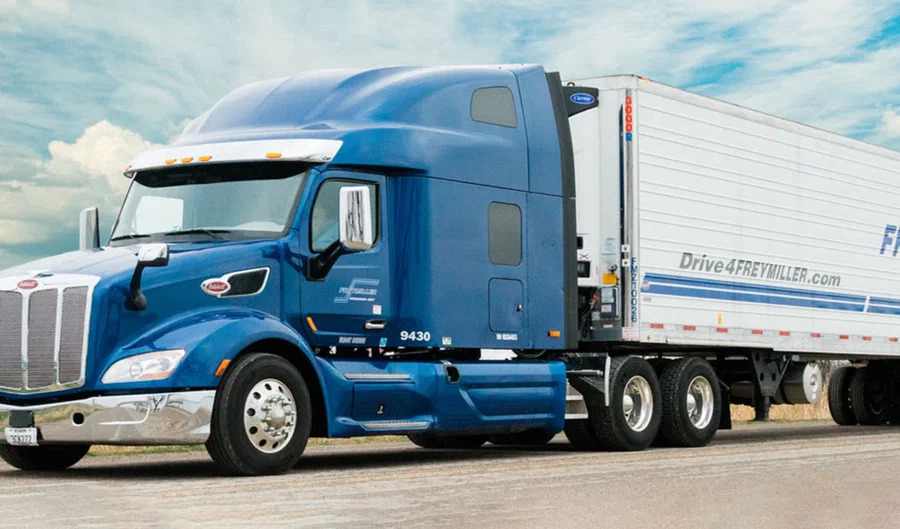
A dark blue semi-truck pulling a refrigerated trailer.
TL;DR
Reefer freight is temperature-controlled shipping moved in refrigerated trailers. It is used for freight that must stay within a defined range, including frozen foods, chilled meat, dairy, produce, pharmaceuticals, medical supplies, chemicals, and commodities that must be protected from freezing or overheating.
Table Of Contents
Reefer freight, also called refrigerated freight or temperature-controlled freight, is freight moved in refrigerated trailers designed to keep products within a specific temperature range during transit.
The real job is not just keeping freight cold. It is temperature protection: keeping the product where it needs to be, whether that means frozen, chilled, protected from freezing, or held in a warmer controlled range.
That matters because not every commodity has the same requirement. One shipment may be swinging beef that needs a chilled range. Another may be ice cream that must stay deeply frozen. Another may be pharmaceuticals that cannot drop below a certain threshold. Another may be a product that needs to stay around 80 degrees without going under or over.
The short version: reefer freight is used for any commodity with a defined temperature window, not just frozen or refrigerated goods.
What Temperature Protection Actually Means
A lot of shippers hear “reefer” and think cold. In practice, reefer freight is about protecting the temperature window the product requires. Sometimes that means freezing. Sometimes that means refrigeration. Sometimes that means protect-from-freeze service. Sometimes it means holding a product in a controlled room-temperature range so it does not get too hot or too cold.
Here is how those windows break down in practice:
Frozen: ice cream, frozen meals, and other food and beverage freight that must stay at 0 degrees F or below
Chilled: fresh meat, poultry, and seafood that need temperatures close to the low 30s F
Refrigerated: produce, dairy, and beverages that need consistent cooling to preserve quality
Protect from freeze: products that must stay above freezing in winter conditions or on cold lanes
Controlled room temperature (CRT): heat-sensitive products that need to stay within roughly 59 degrees F to 77 degrees F
The equipment does not change. The setting does. That is what makes reefer freight more nuanced than most shippers expect when they first start moving temperature-sensitive commodities.
How Reefer Freight Works
Moving reefer freight is not just booking a refrigerated truck. Every step in the process is designed to protect the temperature window from the moment the shipment is planned through final delivery.
Here is how a properly managed reefer move works:
Match to the right equipment: the shipment is paired with a refrigerated trailer that has the right temperature range and capacity for the commodity.
Pre-cool the trailer: the trailer is cooled, set, or stabilized to the required temperature before loading begins.
Load quickly: freight is loaded fast to reduce exposure time and protect the temperature window.
Maintain in transit: the reefer unit monitors and maintains temperature throughout the move.
Coordinate delivery: appointments are managed to reduce dwell time, dock exposure, and temperature risk at the receiver.
A delayed appointment, a missed pre-cool, or too much dock exposure can turn into rejected product, lost margin, and compliance risk. The logistics plan around the freight matters as much as the equipment itself.
Understanding how reefer freight fits into your broader cold chain logistics operation is what separates a smooth move from a costly one.
Reefer freight depends on both the trailer setting and the loading plan around it.
Different Commodities, Different Temperature Needs
There is no single reefer setting that works for every product. The right temperature requirement depends on the commodity, shipper instructions, receiver expectations, and any label or compliance requirements tied to the product.
Consistent cooling and airflow to preserve freshness and shelf life
Dairy products
Steady refrigerated conditions to reduce spoilage risk
Seafood and shellfish
Strict cold protection for freshness and food safety
Floral products and plants
Controlled temperatures to reduce wilting and damage
Chocolate and confectionery
Protection from heat exposure and melting
CRT or heat-sensitive products
Controlled room temperature, often roughly 59 degrees F to 77 degrees F
Protect-from-freeze commodities
Must stay above freezing even in winter conditions
The common thread: every commodity on this list has a defined temperature window. The broker’s job is to make sure the carrier understands that window and the equipment is set correctly before the truck leaves the dock.
What Is a Reefer Trailer?
A reefer trailer is an insulated trailer with an active refrigeration unit that keeps freight at a target temperature in transit. Unlike a dry van, a reefer trailer is designed to cool, maintain, and help protect a specific environment so sensitive products stay within their required temperature range over long distances.
A dry van protects freight from weather and road exposure. It does not control temperature. A reefer trailer actively manages the internal environment from the moment it is pre-cooled before loading through the final delivery appointment.
Key Differences Between a Reefer Trailer and a Dry Van
Feature
Reefer Trailer
Dry Van
Temperature control
Active refrigeration unit
None
Insulation
Heavy insulated walls
Standard walls
Pre-cooling
Required before loading
Not applicable
Use case
Temperature-sensitive freight
General freight
Cost
Higher than dry van
Standard market rate
The practical takeaway: if your product has a temperature requirement written on the label, spec sheet, or purchase order, it likely needs reefer equipment.
Temperature-controlled freight starts with the right equipment, then depends on clear instructions and disciplined coordination.
Reefer Freight With Cowtown Logistics
Cowtown Logistics provides refrigerated freight brokerage for shippers that need dependable temperature protection, clear communication, and nationwide refrigerated capacity. Whether the product needs to stay frozen, chilled, protected from freeze, or held in a narrow band, we help match the shipment to carriers that understand temperature-controlled freight.
We work with shippers moving:
Swinging beef, fresh meat, poultry, and seafood that need chilled transit
Ice cream, frozen meals, and frozen foods that must stay at true frozen settings
Flowers, plants, chocolate, and temperature-sensitive industrial or chemical products
The wrong setting, a delayed appointment, or too much dock exposure can turn into rejected product, lost margin, compliance risk, and unhappy customers. We keep the shipment plan tight from pickup through delivery.
What to Have Ready When You Request a Reefer Quote
The more specific the shipment details are, the easier it is to match the load to the right refrigerated solution. Before requesting a reefer freight quote, gather:
Lane, pickup date, and delivery timing
Commodity and packaging type
Target temperature or required temperature range
Weight, pallet count, and dimensions
Whether the trailer must be pre-cooled before loading
Pickup and delivery appointment requirements
Any documentation, monitoring, or compliance needs
Those details help prevent assumptions. With temperature-sensitive freight, assumptions are where problems usually start.
FAQ
Is reefer freight always frozen?
No. Reefer freight can be frozen, chilled, protected from freezing, or held in a warmer controlled temperature range depending on the product and its required temperature window.
What is the difference between a reefer trailer and a dry van?
A reefer trailer has an active refrigeration unit and heavy insulation to maintain a target temperature throughout transit. A dry van protects freight from weather and road exposure but does not control temperature.
Yes. Reefer equipment can be set to protect freight from freezing in winter conditions or on lanes where outside temperatures could damage the product.
Can a product need to stay warm in transit?
Yes. Some commodities require a controlled room-temperature range, meaning the goal is to prevent the product from getting too cold or too hot. That is temperature protection, not just refrigeration.
The Bottom Line
Reefer freight is not just refrigerated shipping. It is temperature protection for any commodity with a defined window, whether that means frozen, chilled, above freezing, or controlled room temperature. The equipment is only part of the equation. The carrier knowledge, the pre-cool, the appointment coordination, and the communication throughout the move are what protect the product.
A compliance-first guide to the four permit types for oversized and overweight transport — what triggers each one, how state rules differ, and how to avoid the lead-time mistakes that strand loads on the shoulder.
A field guide to 20 major North American carrier networks—and how brokers can use carrier knowledge to find stronger lanes, better capacity, and new shipper opportunities.
Data center freight includes server racks, switchgear, generators, chillers, UPS systems, cable, and replacement parts that must arrive on schedule, intact, and visible from pickup to delivery.
Read the story→
This website uses cookies to improve functionality and user experience. By continuing to use this site, you acknowledge our use of cookies. See our
privacy policy.