Table Of Contents
When knowing the key differences, a professional can make the right decision between the two options. In the article below, you will learn the main differences between the two methods, and you will be able to decide what’s right for you, depending on your wants and needs.
What Is Freight Floor Loading?
If you ask yourself, what is floor loading, the answer is simple. Freight loaded on a trailer floor and stacked vertically toward the ceiling is known as floor-loaded freight. This freight is called “loose” freight or non-palletized freight since it’s not secured to anything. Shipments such as these often are filled with packages too small for palletization, and a floor loaded trailer is perfect for small packages.
There are also floor load products that are just shaped awkwardly or very big. Specific examples might include metal coils, pipes, carpets that are rolled up, tires, and ladders - all of which fall under heavyweight shipping. Floor-loaded freight isn’t just piling up boxes because it’s stacked up as if making a wall.
Safety guidelines for floor-loaded freight exist to keep workers and packages safe at the same time. Package lifting should always happen with your legs instead of your back. Packages of heavy weight or average size go to the far left or right of the wall or put on the top.
Smaller boxes go to the top to fill the remaining space. Long and thin parcels go to the far left or right of the wall or at the top. Packing things in tightly prevents anything from bouncing around, falling, or breaking. A properly loaded wall is not likely to collapse or fall on someone.
What Is Freight Palletization?
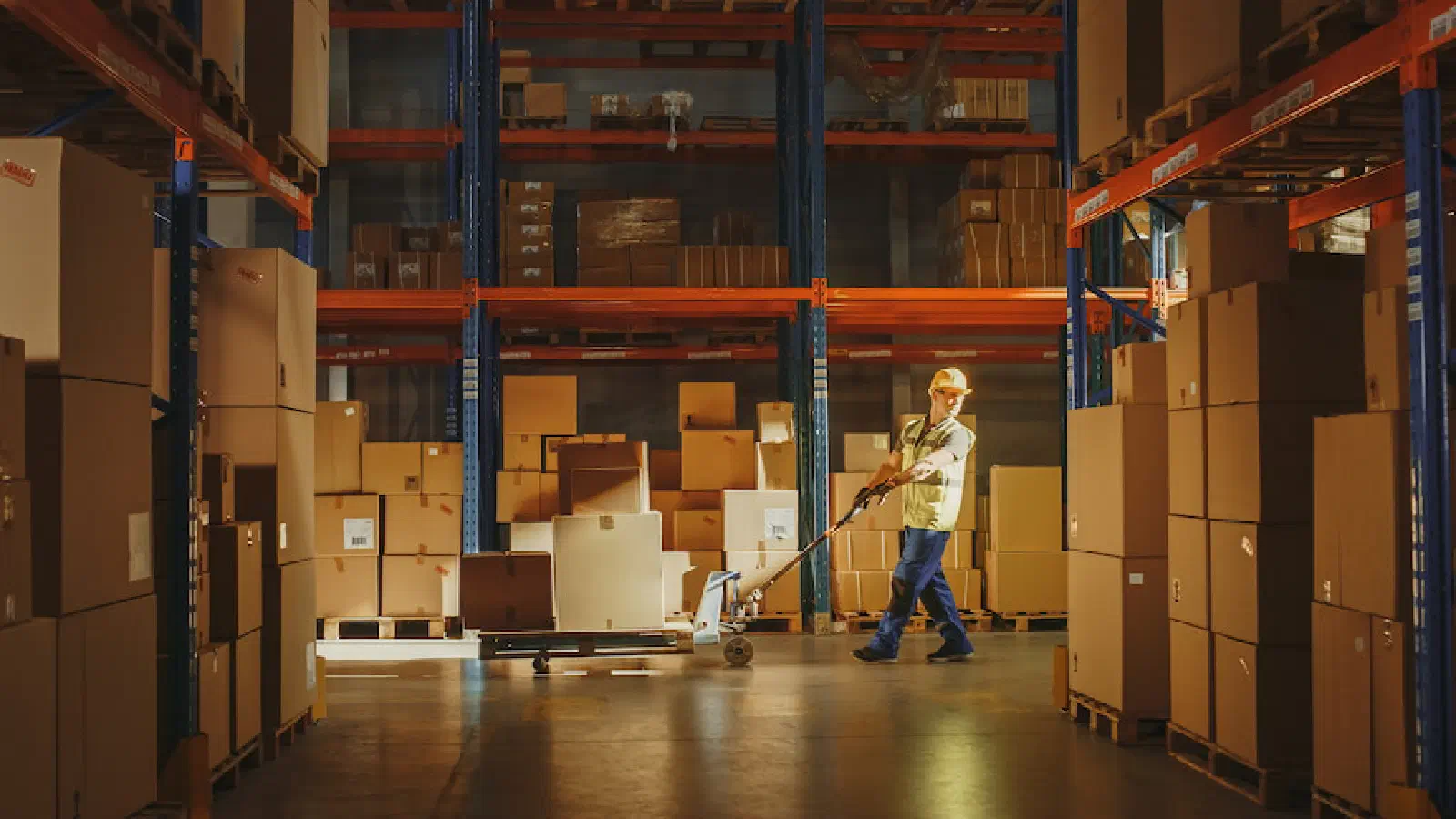
 Palletization meaning is simple, and palletizing happens when cargo gets wrapped up while being secured onto its pallet. A pallet is a wooden structure cargo gets stacked on for shipping. Bigger boxes and very fragile freight pieces are often secured to pallets. Palletized freight often follows similar loading styles across most shipping companies. Forklift operators follow multiple guidelines when lifting pallets.
For starters, they examine a pallet to check its condition and verify even loading. They need to be sure the forklift can actually handle the weight. Damaged pallets need a replacement immediately.
Pallets loaded unevenly need lifting by using the forklift heels of their arms. A forklift has to be positioned upright before its forks go into a pallet. These forks need to be properly spaced when lifting a pallet. The operator must be sure the forks don’t touch any pallet part until lifting is to commence.
Forks should be tilted back slightly when doing pallet lifting. Always lift pallets rather than push them over the floor of a warehouse, as this can damage them needlessly.
Gently move lifted pallets to their intended spot, and lower them with just as much care. Forklift procedures exist for the safety of operators and nearby workers.
Floor Loading: Pros and Cons
One key thing to remember is that floor-loaded goods will have lower freight costs. A big reason behind this is that a whole container will be used for loading the products. That means you don’t have to pay for any pallets. You’ll also likely need fewer containers for commodities shipping. Being able to fit more products into a shipment can certainly keep costs down, and that’s compounded when pallets aren’t actually necessary along the way.
One potential downside is that this kind of loading might be sufficient for all products. For instance, it might be overly risky for fragile and delicate products. The possibility of damage is higher in such instances. Rather, this system is better for bulky or heavy products, including pipes, carpets, and tires. That risk element can increase the cost.
Keep in mind that packing and unloading your freight shipment off of the floor will increase labor costs. The process is also involved enough to take more time. Companies should run a cost-benefit analysis of the time and labor expenses before choosing this option. Every shipment needs to be loaded and also unloaded manually by hand when this is utilized.
Freight Palletizing: Pros and Cons
 Many shippers utilize pallets when sending cargo long distances. Palletization means you can turn a lot of smaller boxes into one single big unit. That larger unit has more strength than the single boxes comprising it. That’s why many assume this to be a more secure method of handling their cargo.
Pallets also have the benefit of elevating cargo off of the container floor while in transit. This can protect them from water spills inside the container. Pallets are also standardized to the point of fitting in containers easily given the nearly universal standards for physical dimensions.
Calculating how many pallets are necessary is easy to do, so there’s no need for complicated algorithms. Pallets are also easily moved when loading and docking. Palletization can also work out well for both FTL and LTL freight.
If you operate in the United States, then you should know the restrictions in place by both FedEx and UPS. Couriers from those two carriers won’t even pick up pallets unless a shipment was done using in-house freight servicing, therefore palletized delivery can be more complicated. FedEx Freight mandates palletization for its transit applications. UPS will still take unpalletized parcels if you utilize the in-house freight services they provide.
Floor Loading vs Palletizing: Which One to Choose?
Consider how much time you have and what the costs might be. Pallets add up the costs since you have to buy them. Then again, they’ll save time during both loading and unloading. Floor loads might not include the costs of pallet materials, but they also have to be done manually. That boosts the costs of time and labor.
Amazon is among the companies that prefer pallets. For instance, Amazon FBA puts serious restrictions on any attempts at floor loading. They might even decline shipments for not meeting their requirements. Amazon FBA contracts dictate that any box of 50 lbs or more has to be palletized so they can use forklifts. That lines up with OSHA guidelines using two or more warehouse workers when needing to move a box of that weight.
Floor loading might be preferable when you have lots of items and would like to minimize your costs when loading a pallet. You can fill up a container and make the most of it. The flip side would be the cost stemming from loading and unloading. This kind of loading works well for durable items and things that are heavy, bulky, or both.
Manage Your Freight Shipping Costs
If you have to ship things, then you can either use floor packing or pallets. Each has its own set of costs and risks involved. Palletized shipping is safe, compact, and simple to move but they also cost more. Floor loading lets you pack large items cheaply with the downside of more manual labor.
You can do an effective cost-benefit analysis by getting a freight shipping quote. Then, you can make an informed and balanced decision regarding all the factors involved with shipping your products and goods.
Frequently Asked Questions
What is the difference between floor loading and palletizing freight?
Floor-loaded freight is stacked directly on the trailer floor without pallets, while palletized freight is secured to a wooden pallet before loading. Floor loading works well for oddly shaped or bulky items, while palletizing suits fragile or uniformly sized freight.
Is floor loading or palletizing cheaper?
Floor loading typically has lower material costs since no pallets are needed, but it requires more manual labor to load and unload. Palletizing costs more upfront but saves time and reduces handling during loading and unloading.
Which shipping method should a shipper choose?
The choice depends on the freight type and priorities — floor loading suits bulky or heavy items where cost matters most, while palletizing suits fragile freight or shipments needing faster loading and unloading, such as those bound for FedEx or UPS.