The most common pallet size in the United States is 48 inches by 40 inches, but other standard pallet footprints are used in certain industries. Pallet dimensions matter because they affect trailer capacity, warehouse handling, and how efficiently freight can be loaded and shipped.
Table Of ContentsCurious about the standard pallet size? With a service that many rely on, you would think that it’s common knowledge to know the standard size for pallets but think again.
While the global shipping industry is a massive production, knowledge about standard pallet dimensions is less common. But that’s not to say there’s no standard set. To better plan your freight shipments and have some must-know shipping information on hand, let’s get into all the details on the average pallet size, the types, and how they are transported.
Average Pallet Size
Wondering “how big is a pallet?” While there is technically a standard pallet size, there are a few takes on this “standard.” When we talk about a standard pallet, we aren’t speaking of the pallet weight, but more so the pallet dimensions. The most common standard pallet size in the United States is 48” x 40”, and it is the footprint many warehouses and carriers use as their baseline for freight planning.
However, there are a couple more pallet sizes that are also recognized as “standards” in the industry. These pallets include:
48” x 40”
42” x 42”
So, while you can’t guarantee that every pallet will be 48” x 40”, you can usually expect it to fall into one of these common standard size options.
Standard Pallet Dimensions for America (W x L in mm & in)
In the United States, the most common pallet footprint is 48 x 40 inches. That standard is used across many warehouses, retail supply chains, and truckload planning workflows because it balances storage efficiency with forklift access and trailer space.
Here are a few common pallet dimensions used in North America:
Pallet Size (inches)
Pallet Size (mm)
Common Use
48 x 40
1219 x 1016
General warehousing, retail, and consumer goods
42 x 42
1067 x 1067
Beverage, chemical, and paint shipments
48 x 48
1219 x 1219
Drums, bulk goods, and some industrial freight
36 x 36
914 x 914
Lighter industrial and specialty freight
Even when the 48 x 40 pallet is treated as the standard, it is important to confirm the actual pallet footprint before quoting or planning a shipment. A few inches can change trailer layout, stack count, and warehouse handling.
ISO Standard Pallet Size Chart
Below are standard ISO pallet sizes In North America and other continents.
Region
Common ISO-Recognized Size (mm)
Approx. Size (inches)
North America
1219 x 1016
48 x 40
Europe
1200 x 800
47.2 x 31.5
Asia
1100 x 1100
43.3 x 43.3
Australia
1165 x 1165
45.9 x 45.9
These pallet sizes are helpful reference points when freight moves across different warehouse systems, export channels, or international supply chains. If a shipment is crossing regions, pallet dimensions should be confirmed early so the freight can be loaded, stored, and delivered without avoidable handling problems.
What Are Pallets Used for in Transportation?
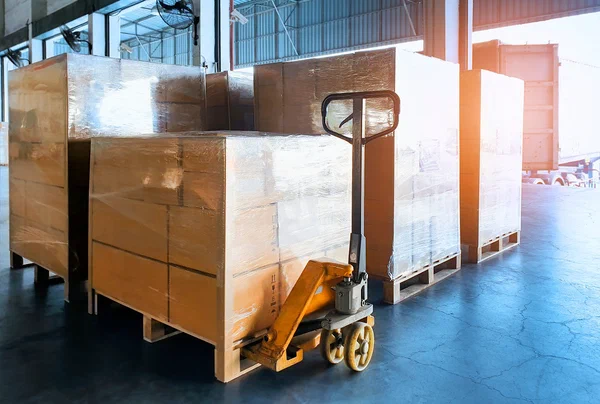
Pallets used in transportation and freight handling
The purpose of a pallet is to protect the goods you’re shipping in a freight shipping process. Additionally, pallets help boost efficiency and optimize space in the freight, allowing for more goods to be shipped at once.
Protecting your goods and better-using space in a shipment isn’t the only reason the industry relies on pallets. Pallets are convenient to forklift, which is wonderful for heavier loads. Additionally, pallets will be easier to store once brought to a warehouse in a more compact shipment.
The pallet size can be made custom based on the goods you’re shipping for a size that best suits your products, or you can rely on the standard pallet sizes to pack and ship your goods.
Types of Pallets
With a few standard pallet sizes, there are multiple types of pallets that are relied upon for shipping. With different standard pallet height options and an average pallet weight that each type can handle, the various pallet types can suit a variety of shipping needs.
To understand the pallet types, here are a few of the most common pallets used in the industry.
Stringer Pallets
Stringer pallets get their name due to the boards, which are referred to as “stringers,” that run from the top to bottom decks to help support heavier loads. Typically classified by both two-way and four-way designs, a two-way pallet signifies that a forklift can enter from two sides. This form of a stringer pallet can all be called “unnotched.” On the other hand, a four-way pallet allows for a forklift to enter from all sides.
Block Pallets
With cylindrical posts to keep the top deck secure and stable, a block pallet is a four-way pallet with a wide range of designs. With many configurations, this type of pallet can come both with and without top or bottom boards, depending on your shipment’s needs.
Solid Deck Pallet
As the name suggests, a solid deck pallet is a pallet that uses one single, solid sheet of wood without any spaces on the top. Instead of relying on a series of planks, a solid pallet is great for transporting small goods that would slip through the boards of other pallets. Plus, this choice is easier to transport than some other pallets.
Double Face Pallet
With decks on both the top and bottom, it’s no wonder it’s called a double face pallet. With both a top and bottom deck, this pallet is strong and better at evenly distributing weight. This is thanks to the bottom deck add-on, which helps create a stronger pallet design.
Double Wing Pallet
Similar to a double face pallet, double-wing pallets have a top and bottom deck board, however, with this pallet, the boards go beyond the stringers. This design gives the pallet the look of having wings, hence the name.
How Many Pallets Fit on a Truck?
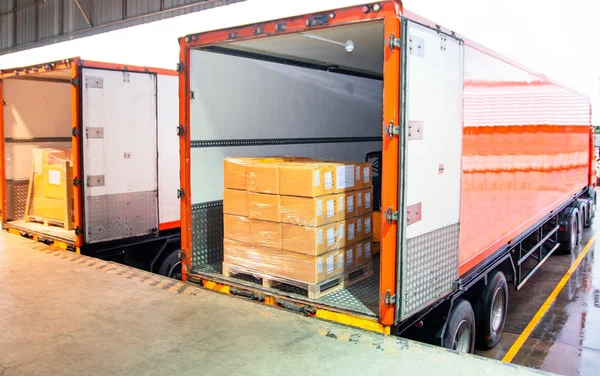
Pallet arrangement for truck transportation
So, how many pallets fit on a truck? While this does depend on the size of the truck to determine the pallets per truckload, there is a bit of a standard to go by to better understand.
When it comes to how many pallets are in a full truckload, let’s think about the standard truck size. Both 53-foot vans and 48-foot vans are commonly used in truck shipping. So, in a 53-foot van, around 26 single-stacked pallets will fit, or 52 double-stacked pallets. On the other hand, in a 48-foot truck, around 24 single stacked pallets and 48 double-stacked pallets will fit.
Considering how many goods can be packed within a pallet, having around 26 pallets per truckload allows a van to transport quite a lot at once. While more or less, pallets will be able to fit in varying van sizes, there’s still a good amount of room.
One of the smallest truck sizes to carry pallets is the 16-foot box truck. So, how many pallets fit in a box truck? Typically, it’s estimated that 6 pallets can be transported in a box truck. While this is quite a few less than a 53-foot van, 6 pallets can still house a lot of goods in each.
What Are Pallets Made Of?
With so many different pallet types and sizes, there are also some varying material choices for creating a pallet.
Typically, shipments rely on a wooden pallet since it’s a cheaper choice and can be recycled when done or if broken in the shipping process. Plastic pallets are also commonly used and are wonderful if you’re looking for a more durable pallet. However, due to the heightened durability, plastic pallets come at a higher price.
Depending on the pallet you need, you can find them in bulk at pallet manufacturers - a perfect option for when you’re shipping large quantities. With many pallets being great for multiple shipments, businesses tend to recycle their pallets for future shipments, packing new goods in previously used pallets until they are too damaged or broken.
FAQ
What is the standard pallet size in the United States?
The most common pallet size in the United States is 48 inches by 40 inches. That size is often treated as the default shipping pallet because it fits common warehouse systems, trailer layouts, and material-handling equipment.
How many pallets fit on a 53-foot truck?
A 53-foot dry van commonly fits about 26 single-stacked standard pallets. The true count can change depending on pallet dimensions, how the freight is loaded, and whether the shipment can be double-stacked.
Why do pallet dimensions matter in freight shipping?
Pallet dimensions affect how much freight fits on a trailer, how efficiently the load is handled in the warehouse, and whether a shipment is planned as LTL, partial, or full truckload freight. Even small size differences can change space usage and costs.
Conclusion
When shipping large quantities of goods, pallets are a standard shipping tool to help you ship more products more conveniently. They not only protect your shipments but allow for more convenience in the process to ensure your goods get to you safely and securely.
Whether you’re still asking yourself “how wide is a pallet” or unsure how many you need to ship your goods, our team is happy to help. Contact our DFW trucking company to choose the type and size of pallet to suit your cargo or get a freight transportation quote online today.
A compliance-first guide to the four permit types for oversized and overweight transport — what triggers each one, how state rules differ, and how to avoid the lead-time mistakes that strand loads on the shoulder.
A field guide to 20 major North American carrier networks—and how brokers can use carrier knowledge to find stronger lanes, better capacity, and new shipper opportunities.
Data center freight includes server racks, switchgear, generators, chillers, UPS systems, cable, and replacement parts that must arrive on schedule, intact, and visible from pickup to delivery.
Read article→
This website uses cookies to improve functionality and user experience. By continuing to use this site, you acknowledge our use of cookies. See our
privacy policy.