What Is a Straight Truck? Definition, Types and Tractor-Trailer Differences
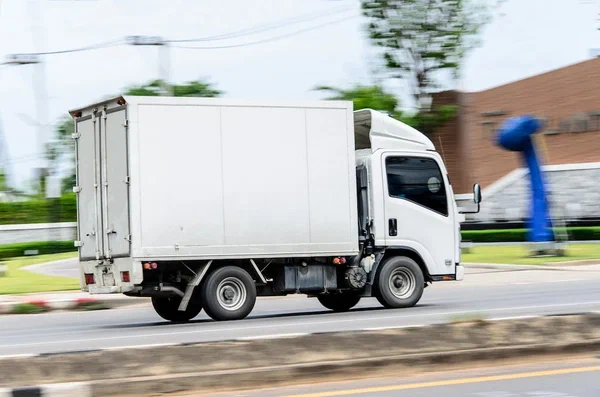
A straight truck is a commercial vehicle whose cab and cargo body are mounted on a single chassis. Unlike a tractor-trailer, it carries freight on its own frame instead of pulling it in a separate, detachable semitrailer.
A straight truck’s cab and cargo body share one chassis; a tractor-trailer is a truck tractor pulling a detachable semitrailer. Straight trucks, such as 26-ft box trucks, suit smaller dedicated loads and tighter sites; tractor-trailers carry far more and offer more trailer types. Choose by weight, size, handling needs and site access, and check the assigned vehicle’s specs.
Table Of Contents
This guide explains how straight trucks and tractor-trailers differ, what each can typically carry, how DOT terminology and CDL classes apply, and how to choose equipment for a shipment.
What Is a Straight Truck?
Because its cab and cargo body share one continuous frame, a straight truck is also called a single-unit or rigid truck. The Federal Highway Administration’s vehicle classification describes single-unit trucks as vehicles “on a single frame.” The cargo body can be an enclosed box, a refrigerated body, a flatbed, or another body built for a particular job.
The defining feature is the shared chassis, not a particular weight, body length, or route distance. Some straight trucks can tow an additional trailer, but their own cargo body remains on the truck’s frame.
A straight truck carries its cab and cargo body on the same chassis.
What Is a Tractor-Trailer?
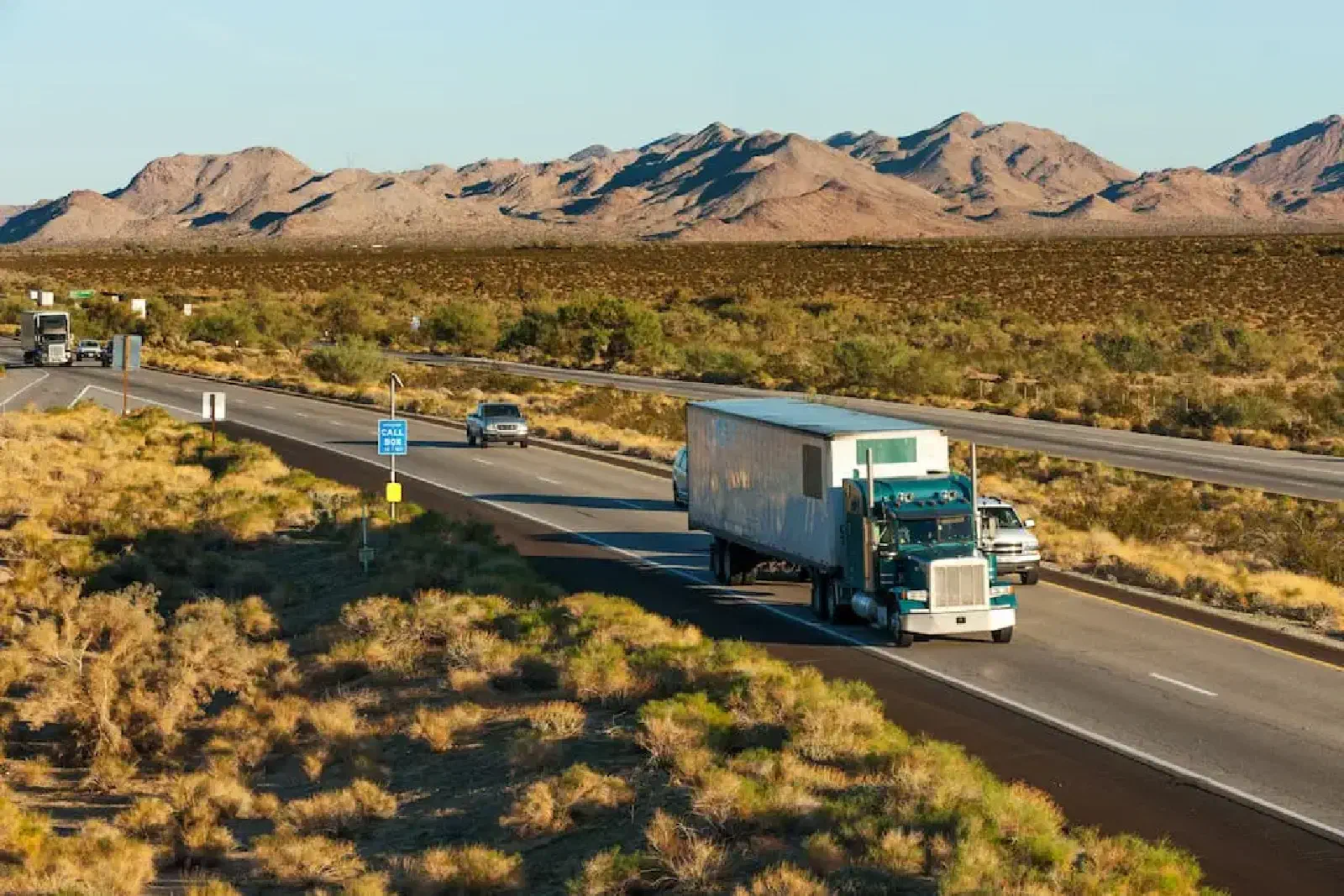
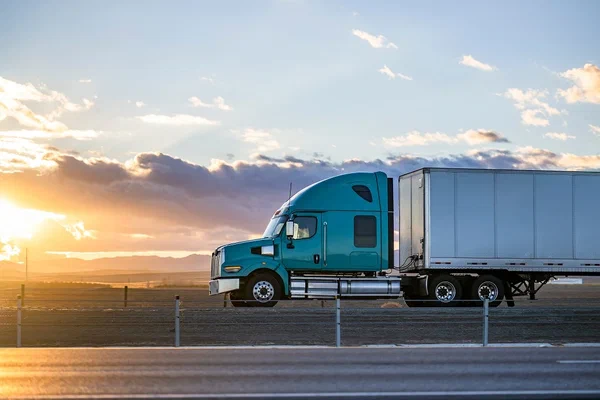
A tractor-trailer is a combination of two connected units: a powered truck tractor and a separate semitrailer. The tractor provides the cab, engine, and pulling power. The semitrailer carries the freight and can be disconnected from the tractor.
Trailer selection depends on the load. An enclosed dry van, refrigerated trailer, or flatbed serves different cargo and loading needs, and a step deck can carry taller freight. Our guide to what a Conestoga trailer is explains another option that combines an open deck with a retractable cover.
A tractor-trailer combines a powered truck tractor with a separate semitrailer.
What Is the Difference Between a Straight Truck and a Tractor-Trailer?
The core difference is whether the freight rides on the truck’s own frame or on a separate trailer. Here is how that affects common freight applications. On small screens, swipe the table sideways to see both vehicle types.
Feature
Straight truck
Tractor-trailer
Configuration
Cab and cargo body share one chassis
Cab is on the tractor; cargo is on the trailer
Detachable trailer
Cargo body stays on the truck; an additional trailer may be towed
Semitrailer can be detached and exchanged
Capacity reference
Varies by rating; rental 26-ft box trucks are listed at up to 10,000–17,000 lb of payload
Generally up to 80,000 lb gross vehicle weight on the Interstate system
Common uses
Local deliveries, regional distribution, smaller dedicated moves
Truckload freight, linehaul, loads needing a specific trailer type
Tractor with a dry van, refrigerated trailer, or flatbed trailer
Maneuverability
A smaller configuration can suit tighter delivery sites
A full-size combination generally needs more room to turn and position
A tractor-trailer can also run local routes, and not every straight truck fits every tight site, so the specific vehicle matters more than the category.
How Much Can a Straight Truck Carry?
Capacity depends on the specific truck’s gross vehicle weight rating (GVWR), its empty weight and its body. Straight trucks span the federal weight classes from Class 3 (10,001–14,000 lb GVWR) to Class 8 (over 33,000 lb GVWR).
The most familiar freight example is the 26-foot box truck. Penske, for instance, lists its non-CDL 22–26 ft box trucks at up to 26,000 lb GVWR, up to 10,000 lb of payload and about 1,700 cubic feet of cargo space, and its CDL-required versions at up to 33,000 lb GVWR and up to 17,000 lb of payload. A 26-foot box has floor space for roughly 12 standard 48 × 40 in. pallets loaded two across.
By comparison, a tractor-trailer on the Interstate system is generally limited to 80,000 lb gross vehicle weight. A 53-foot dry van commonly holds 26 standard pallets on the floor.
Treat these as reference points, not booking specifications. Check the assigned vehicle’s usable length, door opening, liftgate rating and legal payload before tendering the load.
Straight Truck vs. Truck Tractor
A truck tractor is the powered unit designed to pull a semitrailer; it is not the complete tractor-trailer combination. For example, a box truck delivering goods is a straight truck. The cab-and-engine unit pulling a dry van is a truck tractor, and once connected, the tractor and semitrailer form a tractor-trailer.
The same distinction appears in federal regulations and on FMCSA’s MCS-150 registration form, where carriers report straight trucks, truck tractors and trailers separately. FMCSA defines a truck tractor as “a self-propelled commercial motor vehicle designed and/or used primarily for drawing other vehicles,” and a truck as a self-propelled commercial motor vehicle, other than a truck tractor, designed or used to transport property.
Keeping those terms separate makes equipment requests clearer when speaking with a carrier or broker.
Class B: a single vehicle with a GVWR of 26,001 lb or more, including one towing a trailer rated 10,000 lb or less. Many heavy straight trucks fall here.
Class A: a combination with a gross combination weight rating of 26,001 lb or more when the towed unit is rated over 10,000 lb. This covers most tractor-trailers, and a straight truck pulling a heavy trailer can require it too.
Class C: vehicles below those thresholds that are designed to carry 16 or more people, including the driver, or that transport placarded hazardous materials.
A straight truck rated 26,000 lb or less that does not haul placarded hazardous materials generally does not require a CDL, although it can still be a regulated commercial motor vehicle under other FMCSA rules. States administer licensing, so check the requirements where the driver is licensed.
Straight Truck vs. Box Truck
A box truck is a type of straight truck with an enclosed, box-shaped cargo body. The terms describe different features: straight truck refers to the chassis configuration, while box truck refers to the cargo body.
Not every straight truck is a box truck. A flatbed straight truck uses an open cargo deck, for example. A box truck is also different from a cargo van; see our box truck vs. cargo van comparison for that distinction.
Common Types of Straight Trucks
Common body configurations include:
Box trucks: Enclosed cargo bodies commonly used for packaged goods and palletized freight that need protection from weather during transport.
Refrigerated straight trucks: Insulated cargo bodies with refrigeration equipment for freight requiring temperature control.
Flatbed straight trucks: Open decks for freight loaded from the side or from above, such as by forklift or crane. Loads must be secured and may need tarping.
Dump trucks and tank trucks: Straight-truck configurations with bodies designed for bulk materials or liquids. These are specialized applications rather than interchangeable options for general freight.
Match the body to the cargo and loading method. For a commercial shipment, review Cowtown’s straight truck freight service and share your freight dimensions, weight, loading access, and dates so the right equipment can be confirmed.
When Is a Straight Truck the Right Freight Option?
Consider a straight truck when the freight fits the actual vehicle and its configuration suits the pickup and delivery sites. A smaller dedicated shipment or a delivery site with limited turning space can make it worth evaluating.
Use these four checks before choosing equipment:
Check the load. Provide the number of pieces or pallets, packaged dimensions, total weight, and whether freight can be stacked. Confirm usable cargo space and payload for the assigned vehicle.
Check both locations. Describe docks, ground-level loading, access restrictions, and available forklifts. If you need a liftgate or other loading equipment, request it explicitly and confirm suitability for the freight.
Check handling and timing. Explain temperature requirements, delivery appointments, and whether the shipment needs a dedicated vehicle. These requirements help determine the service as well as the truck.
Compare suitable options. Consider a tractor-trailer if the load exceeds the proposed straight truck’s usable space or payload, or requires a different trailer configuration. Compare a dedicated move with LTL when shared service could meet the shipment’s needs.
If the freight exceeds standard equipment dimensions or weight limits, it may require a specialized heavy-haul or oversized transport review.
For shipments needing a dedicated trailer, review Cowtown’s full truckload freight shipping services. Avoid choosing solely by mileage or assuming a smaller vehicle will always cost less; request pricing for equipment and service that fit the shipment.
Straight Trucks for Local, Regional, and LTL Freight
Straight trucks can suit local store deliveries, regional distribution, and pickup or delivery work where the load and site fit the vehicle. Local or regional use is common, but distance alone does not define a straight truck or determine the right equipment.
LTL is a shipping service, not a truck type. Less-than-truckload service combines shipments from multiple shippers. Depending on the carrier’s operation, a straight truck may handle a pickup or final delivery while a tractor-trailer handles another leg of the trip.
Compare LTL freight shipping with a dedicated vehicle based on handling, delivery timing, site access, and price. Tell the broker about access restrictions before booking so the delivery equipment can be confirmed.
Straight Truck FAQ
Is a box truck a straight truck?
Yes. A box truck with an enclosed cargo body mounted on the same chassis as its cab is a straight truck. Box truck describes the body style; straight truck describes the single-chassis configuration. Not all straight trucks have a box body.
What is the difference between a straight truck and a tractor-trailer?
A straight truck carries cargo in a body mounted on the same chassis as its cab. A tractor-trailer combines a powered truck tractor with a separate semitrailer that can be disconnected and exchanged. The key distinction is the vehicle configuration, not a fixed load size or travel distance.
What is a truck tractor?
A truck tractor is the powered vehicle designed to pull a semitrailer. It contains the cab and engine; the trailer carries the freight. Truck tractor refers to the power unit, while tractor-trailer refers to the connected combination.
When should a shipper use a straight truck?
Consider a straight truck when the shipment fits the specific vehicle and a smaller vehicle suits pickup or delivery access. Confirm freight weight and dimensions, loading equipment, temperature needs, and scheduling with the carrier or broker before booking.
How much can a straight truck carry?
It depends on the truck’s GVWR and empty weight. For reference, Penske lists non-CDL 26-ft box trucks at up to 26,000 lb GVWR and about 10,000 lb of payload, and CDL-required versions at up to 33,000 lb GVWR and 17,000 lb of payload. Confirm the assigned vehicle’s legal payload and usable space before booking.
Do you need a CDL to drive a straight truck?
A federal Class B CDL is required for a single vehicle with a GVWR of 26,001 lb or more. A straight truck rated 26,000 lb or less generally does not require a CDL unless it transports placarded hazardous materials or is designed to carry 16 or more people. Towing a trailer rated over 10,000 lb can put the combination in Class A.
Find the Right Equipment for Your Shipment
Cowtown’s freight brokerage services help shippers match freight requirements with carrier and equipment options. Share your pickup and delivery locations, packaged dimensions, weight, loading needs, and requested dates so the team can evaluate the move.
A compliance-first guide to the four permit types for oversized and overweight transport — what triggers each one, how state rules differ, and how to avoid the lead-time mistakes that strand loads on the shoulder.
A field guide to 20 major North American carrier networks—and how brokers can use carrier knowledge to find stronger lanes, better capacity, and new shipper opportunities.
Data center freight includes server racks, switchgear, generators, chillers, UPS systems, cable, and replacement parts that must arrive on schedule, intact, and visible from pickup to delivery.
Read article→
This website uses cookies to improve functionality and user experience. By continuing to use this site, you acknowledge our use of cookies. See our
privacy policy.