
TL;DR
Airplane propellers need packaging designed for their size, material, and value. A rigid crate, protected leading edges, internal blocking, and a carrier experienced with aviation components help prevent movement, impact, and surface damage.

TL;DR
However, travel liability can be significantly reduced with specialized crating and careful packing. Expediting airplane propellers and parts are routine in the aviation industry. Given the nature of such high-value equipment, it’s best to work with a trusted freight forwarder who has experience with aircraft parts shipping.
Airline propellers are made from wood, aluminum, or composites. Sometimes the leading edges are reinforced with nickel for durability. Most third-party shippers eliminate the risk of damage during transit by tailoring the packaging of airplane propellers according to size and budget. Remember that density and size (freight class) affect packaging materials and shipping price.
Most airplane propellers have one of the following blade types.
Wood Blades: Predominantly found in hobby or vintage aircraft before World War II, these propellers consist of several layers of wood glued together. Wood blades have a great deal of inherent strength that requires surface and edge protection.
Aluminum Alloy Blades: Strong, light, and easy to repair, these blades have high rotation speeds, making them a popular aviation choice. The general appearance is similar to the wood propeller, except certain sections are thinner.
Composite Blades: Made from carbon fiber, composite blades are strong and easy to shape and repair. Most aircraft manufacturers have switched from aluminum to these due to their versatile and lightweight nature.
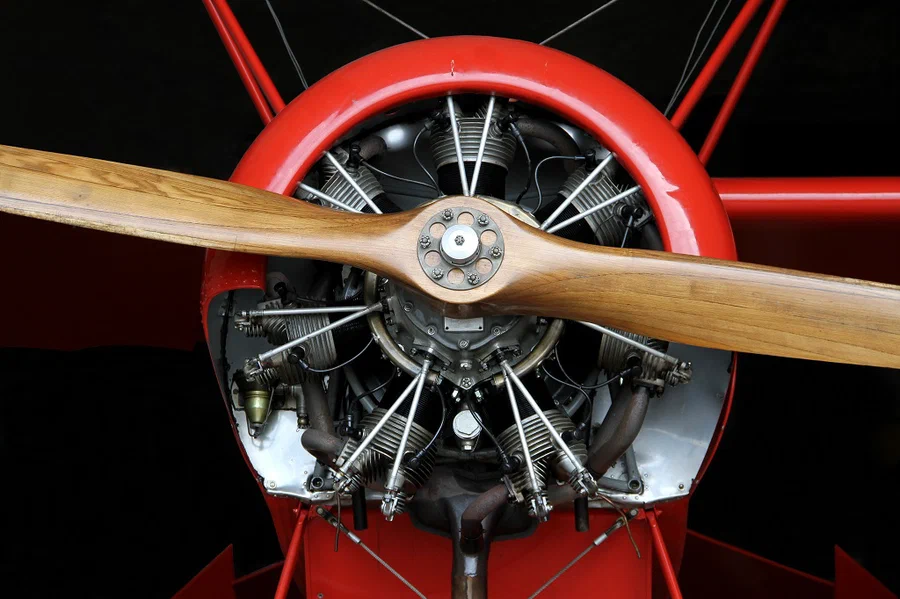
The most important thing to get right when it comes to aircraft parts packaging is ensuring the packaging can withstand inevitable turbulence during transportation. We offer our logistic solutions based on crucial freight-packing practices:
All airplane propellers should always be transported in a propeller shipping box or robust crate and securely packed and padded with foam contours and other supports to protect delicate surface coatings. Padding and protection also absorb impact from handling and traveling on conveyor belts, etc.
Airplane propellers must be packed horizontally on support, supporting the propeller hub, or suspended at the attaching holes in the hub.
During storage, propeller blades should be protected by protective covers. In the event of long-term storage, it is recommended to clean the propeller hub and blades with a detergent and lukewarm water before packaging.
Airplane propeller blades should also be protected by protective covers if transporting the propeller in a disassembled state. Wrapping the blades and hub with several layers of cardboard, bubble wrap, or blankest prevents direct contact during shipping.
FTL stands for “Full Truckload” and refers to hiring an entire shipment for aircraft transportation, whether your goods occupy the entire space in a semi-truck.

LTL stands for less-than-truckload shipping and means you only hire a portion of the semi-truck carrier space.
While LTL offers greater cost savings, there is a higher risk of potential damage and delivery delay. Because LTL does not go directly to the end customer, the actual delivery date may differ from the estimated delivery date. As for safety and speed, when shipping parts from a propeller aircraft, it’s best to go FTL.
According to the International Air Transport Association, airplane propellers require specialty crates and expert handling, which is why it’s safer and better to get professionals to pack and ship your propeller for you. Our DFW trucking company team has been helping aviation clients for over 30 years, specializing in expeditiously shipping parts and reverse logistics.
We know that shipping times are crucial, especially in the aviation industry, and endeavor to provide unparalleled customer service and speedy delivery without compromising safety. If you want complete care of your aircraft parts from pick-up to delivery, then contact us today at 817-590-8686 or get a freight transportation quote online!
Propeller blades are typically made from wood, aluminum alloy, or composite materials like carbon fiber, with some blades reinforced at the leading edge with nickel for added durability.
Propellers should ship in a dedicated propeller box or crate, padded with foam contours to protect surface coatings, and positioned horizontally with support at the hub to prevent movement during transit.
FTL is generally recommended for propellers because it’s faster and avoids the extra handling that comes with transferring freight between trucks, which lowers the risk of damage to these high-value parts.
Keep reading

A compliance-first guide to the four permit types for oversized and overweight transport — what triggers each one, how state rules differ, and how to avoid the lead-time mistakes that strand loads on the shoulder.

A field guide to 20 major North American carrier networks—and how brokers can use carrier knowledge to find stronger lanes, better capacity, and new shipper opportunities.

Data center freight includes server racks, switchgear, generators, chillers, UPS systems, cable, and replacement parts that must arrive on schedule, intact, and visible from pickup to delivery.
This website uses cookies to improve functionality and user experience. By continuing to use this site, you acknowledge our use of cookies. See our privacy policy.